

The principle of inbound marketing is always more or less the same:
- You create content in whatever form to attract leads interested in a given topic.
- You distribute this content to reach your target audience
- You capture leads in one way or another so you can qualify them.
All 3 points are essential to a successful strategy. Creating content that nobody sees is pointless. Distributing content that nobody cares about will bring you nothing. And creating and distributing a lot of free content is great, but without an effective lead capture system, it is a waste of time.
In this article, we present 9 actionable inbound marketing strategies, emphasizing these 3 elements each time.
#1 Write a white paper
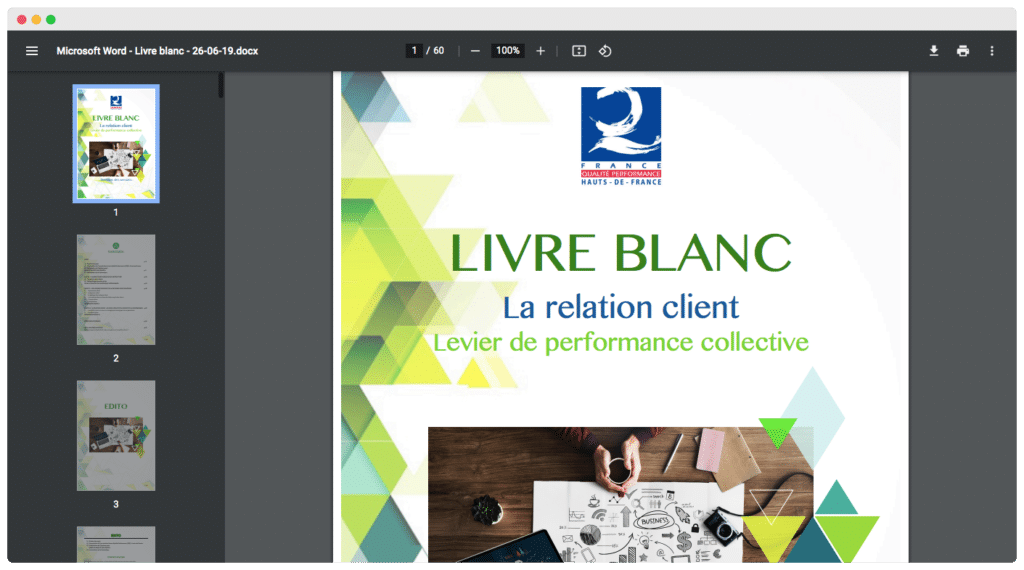
Source: Qualité Performance
A major trend in recent years, offering a white paper is an effective type of content as part of an inbound marketing strategy, especially if you want to target people with a high average order value.
A white paper allows you to demonstrate your expertise on a specific topic. By giving you authority, the white paper helps make your organization a thought leader, an expert in the sector.
This directly affects the way your customers perceive your company. When a customer needs a product or service similar to what you offer, they are more likely to turn to you if, in their eyes, you have a certain level of expertise.
But how does a white paper establish your organization’s authority on a given topic? By focusing on a specific subject and developing it in detail. You need to choose your topic carefully and go deep on content quality.
What is also important is the style in which the ideas are expressed, which helps spark the reader’s interest.
The white paper Accelerating diversity by Founders Intelligence is a good example for understanding how to structure your content well:
- It begins with a compelling foreword as well as a summary, then is divided into chapters.
- Each chapter begins with a visual and a short quote summarizing the issue each chapter addresses.
- A conclusion reviews the content and is complemented by a call to action in order to convert the reader.
#2 Leverage free tools
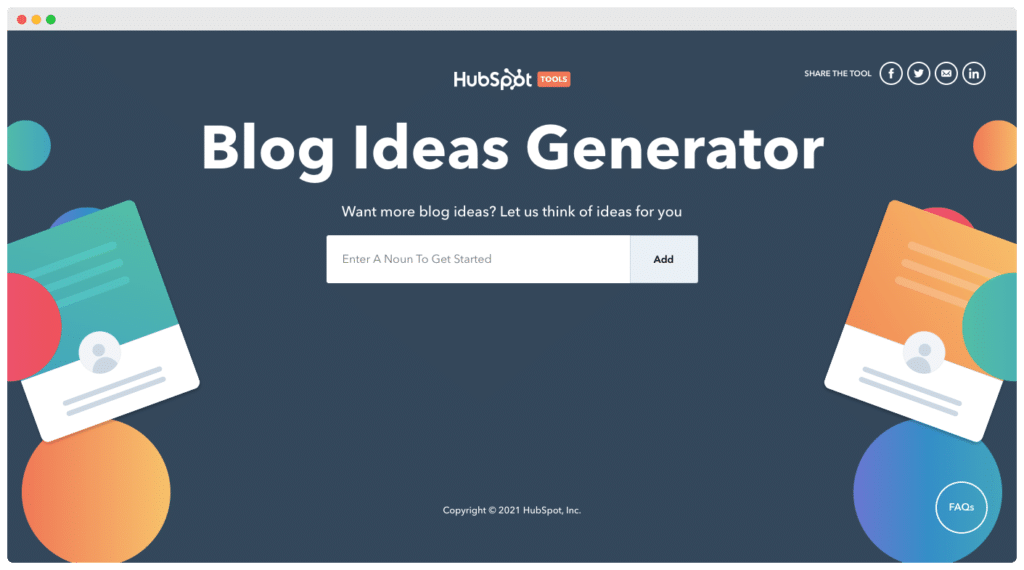
Source: Hubspot Blog Topic Generator
There are many digital tools that provide solutions to problems you encounter as part of your marketing strategy. Some of them allow you to improve your performance for free.
Marketing content creators sometimes struggle to find inspiring topics for their blog. Hubspot Blog Topic Generator meets this need by offering a search engine where you define 5 keywords to determine the direction of your content.
Then, Hubspot offers you a week of topics for your blog for free. A year of content, however, requires registration, according to a freemium model.
#3 Create a template gallery
Source: Zervant
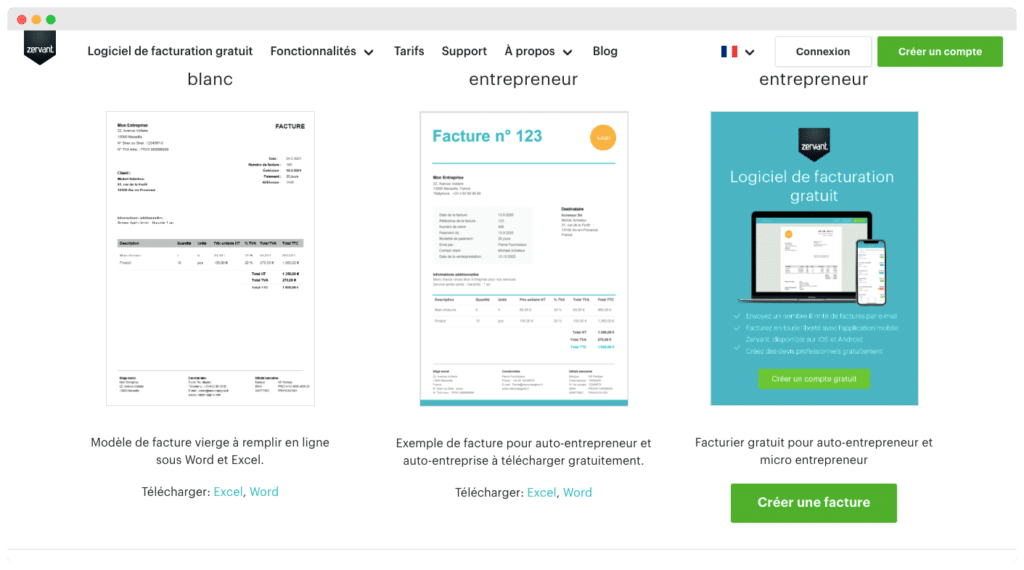
You can decide to make templates available on your site. The Zervant site, for example, offers a gallery of invoice templates. This strategy allows them to drive qualified traffic that can potentially become a target audience.
In addition to explanatory content on the essentials that must appear on an invoice, the templates are categorized by themes and criteria: Word invoice, Excel, sales invoice, sole proprietorship, with or without VAT…
Where they were even smarter is that they added a Zervant promotional block as one of the models in the gallery, to convert in a highly natural way by showing the usefulness of the software.
The key here is to provide value no matter what, by actually offering effective templates as free downloads. In fact, they do not even ask for an email address in exchange for the template.
But the value proposition of the offer they put forward is so strong that they do not need gimmicks to force conversion: instead of struggling every time to download and customize templates, what if you switched to a slightly more serious solution?
#4 Publish a self-qualification quiz
Source: Venture Pact
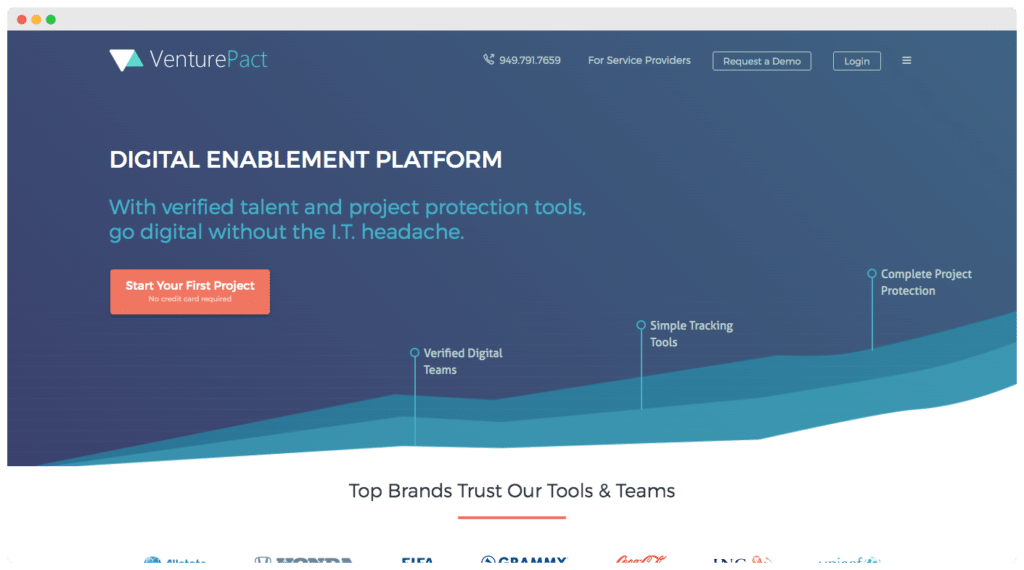
Publishing a self-qualification quiz works well because it allows you to gamify your content by making it fun. Thanks to that, you spark your audience’s interest. An example of the success of this type of content is Venture Pact.
It is a marketplace whose goal is to help people find web developers and designers. The marketing team had put in place an inbound marketing strategy through the development of a blog and ebooks while optimizing SEO and search.
But despite an increase in engagement, the growth rate and performance declined.
Venture Part’s objective was to continue increasing the engagement rate by optimizing team performance.
To do this, they created a mobile app where each customer, in exchange for answering 9 questions, gets an estimate of the production cost of their application. This interactive tool makes it possible to respond instantly to a need and works according to the reward principle inherent in gamification.
Two weeks after its launch, the calculator increased traffic by 15% and the conversion rate by 28%. In total, the company generated 11,592 qualified leads.
So we can consider that developing these tools as soon as visitors arrive on your landing page is an effective way to spark interest and generate leads. All that remains is to choose your landing page tools to get started.
#5 Create podcasts
Source: Jacoby
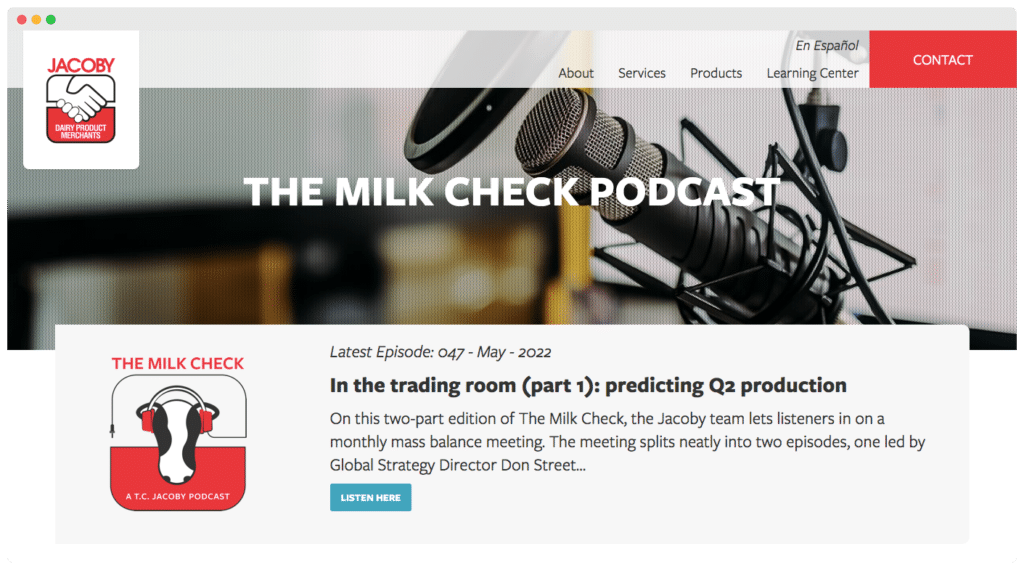
Creating content about your industry as part of an inbound marketing strategy can take various forms. Podcasts are dynamic and attractive content formats that are increasingly being developed alongside the creation of other types of content in order to generate leads.
The agency Gorilla 76 published an excellent case study (in English) on a dairy products distributor in the United States. An important part of its business consists of providing administrative support to dairy cooperatives. The marketing teams observed the weakness of the company’s inbound marketing strategy and saw an opportunity in dairy producers’ uncertainty linked to the complexity of the market.
The company therefore called on the agency to target dairy producers, a key audience, by creating content. They decided to create an informational podcast on the dairy industry, “The Milk Check,” making the most of the company’s expertise in order to create quality content.
The result speaks for itself. The podcast was listened to more than 8,000 times and reached 53 countries around the world.
#6 Create your blog
Source: Buffer
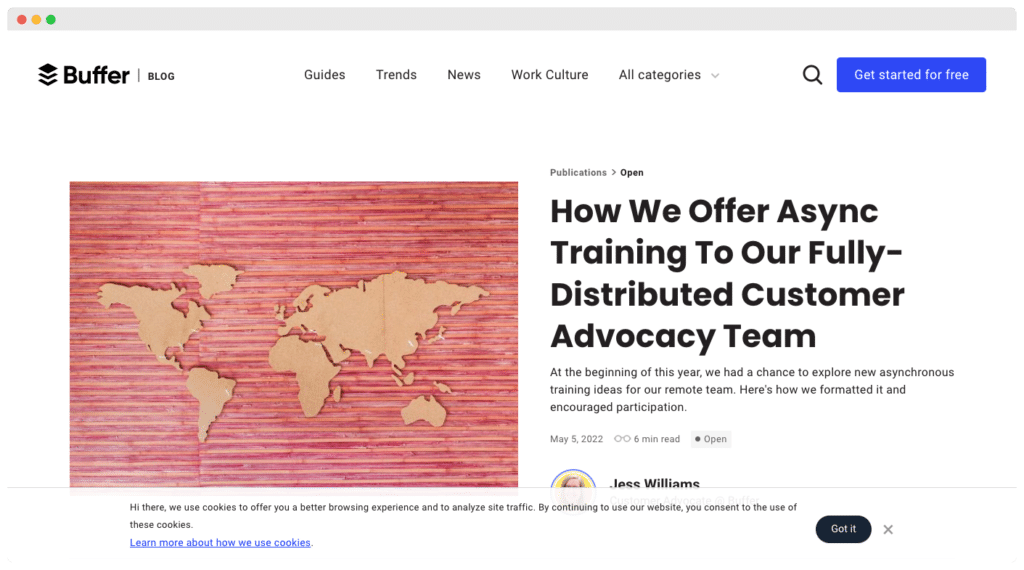
Writing a blog allows your company to establish authority on a topic and generate leads. A recent study by Rédacteur.com highlights that companies using a blog as part of an acquisition strategy attract 67% more leads.
It is a lever for creating strong added value that helps increase sales performance.
The example of Buffer is interesting because it shows the value of developing a two-pronged content publishing strategy. On one hand, the company published guest posts daily on recognized, high-audience sites: this is what is called guest blogging.
At the same time, it created a blog targeting people with strong influence over its customer base. Targeting content well according to your audience and offering quality content means ensuring that it gets shared
Today, the company generates traffic of 400,000 visitors per month with its 4 blogs and a newsletter.
Another example is the company Moz, which decided to create a reference guide on SEO, a practice that looks complex to many people. Generally, since it is a field that evolves quickly, it is recommended to get support from an SEO agency on these issues.
The MOZ guide allows companies to start an SEO strategy independently. Renowned internationally, it enabled the company to establish itself as a reference for implementing a search engine optimization strategy.
#7 Develop an affiliate program
Source: Waalaxy
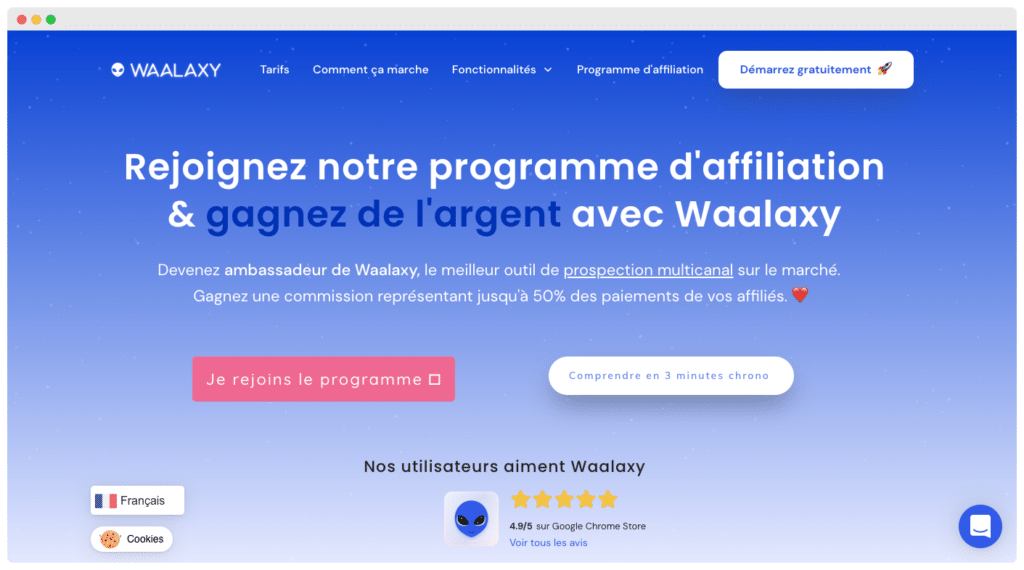
Setting up an affiliate program consists of offering partners the opportunity to recommend your offer in exchange for a commission. In addition to an effective referral program, affiliate marketing enables exponential growth of your customer base.
Waalaxy is a prospecting automation software on Linkedin and by email. They created a very generous affiliate program that allows partners to receive 50% of the revenue generated for the entire lifetime of customers. In affiliate marketing, the norm is more around 20% in the first year, so this is extremely generous.
The high commission system helps encourage promoters but also convert people into promoters to spread your solution.
It is an extremely effective way for them to position themselves on many very high-value keywords on Google.
In a very transactional B2B market, there are not 50 keywords that really generate conversions. The challenge therefore becomes maximizing click-through rates to your site on these keywords.
Instead of relying only on their SEO and SEA efforts, they lean on a whole network of blogs doing the same thing. They even regularly advise their affiliates on the keywords to target, to build real dominance on Google results pages.
Result: on the important keywords, all the results on the page talk about Waalaxy. An extremely effective way to be perceived as a market reference at a lower cost.
#8 Be present on marketplaces
Source: Etsy
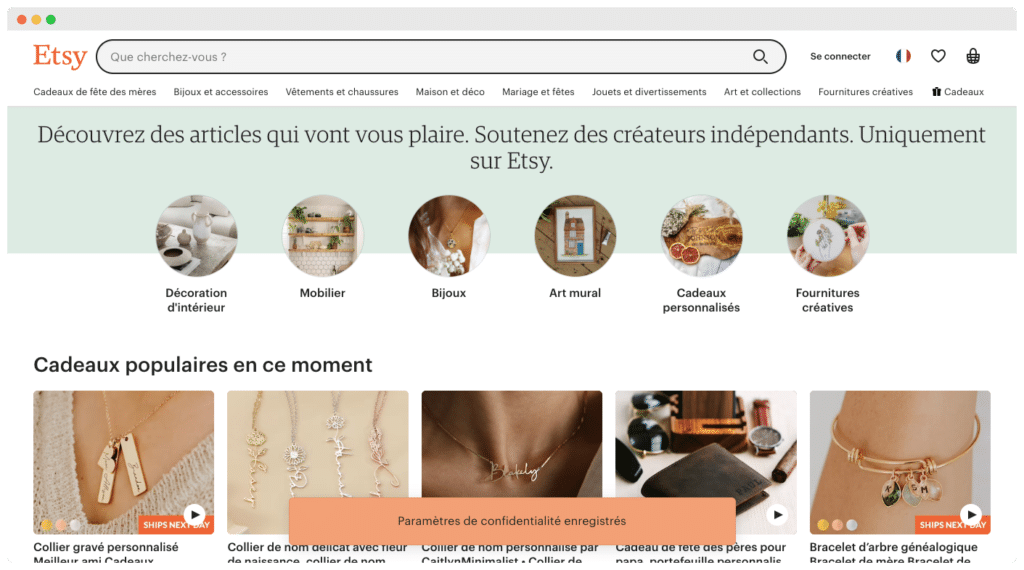
The value of marketplaces is that they have a strong brand identity and offer a clear proposition to their customers that helps trigger purchase intent. The e-commerce market today is full of marketplaces such as Amazon or Etsy.
The model is as follows: in exchange for a commission, the marketplace attracts many customers by pooling offers and effectively increases your audience and sales performance.
While marketplaces are very common in e-commerce, they are becoming unavoidable in B2B. Some platforms such as Shopify, WordPress, or Salesforce AppExchange manage to generate considerable value for their partners.
We are even seeing more and more recommendation engine or pure comparison models emerge, such as sortlist for digital agencies, for example.
#9 Integrate review platforms
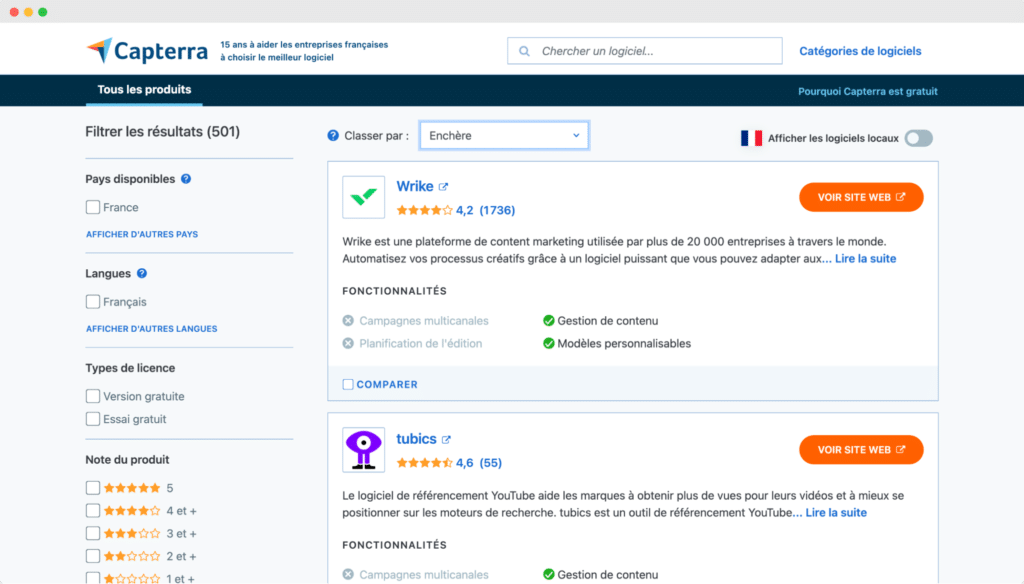
Source: Capterra
The notion of an intent aggregator is very common in B2C lead generation. Insurance, banking, etc. comparison sites are everywhere. The idea is fairly simple: the internet user is looking for a comparison of solutions, and on a somewhat complex topic, comparing several offers takes a lot of time and energy.
That is where a comparison generates a lot of value.
As a bonus, the platforms that positioned themselves in this niche have developed a lot of new content over time, especially customer reviews. For them, it is free content that helps them secure their positions. And for the reader, these are “objective” reviews.
But the same thing is growing a lot on the B2B side. Review aggregators such as Capterra, G2, Trustradius, and many others are taking up more and more space on Google results pages.
In concrete terms, the user typed “Best inbound marketing software” and lands on a list of tools, with well-ranked tools (at the top) and less well-ranked tools (at the bottom).
Managing to consistently position yourself in the top tier is a huge repetition lever, which literally allows you to flood the market and become unavoidable. Keep in mind that most of those who arrive on these pages typically open all the aggregators. If you are in the top 3 everywhere, you have effectively become unavoidable.
For example, in the project management tools market, Monday gained a considerable position in very little time. It allows you to flood the market very quickly.