
In an ultra-competitive SaaS environment, growing ARR (Annual Recurring Revenue) is more than an objective: it’s a matter of survival. Yet most efforts are focused either on sales teams or on paid acquisition. What if your ARR also depended on your ability to automate and intelligently orchestrate the customer journey?
Marketing automation is not limited to generating leads: it mainly helps you qualify them better, shorten their sales cycle, maximize their value over time…and manage every stage of the funnel with clear visibility. Discover in this article how to turn it into a growth lever for your ARR.
ARR: your SaaS compass
ARR is the recurring revenue generated each year through your subscriptions. It’s the key indicator of your company’s stability and scalability. It shapes growth forecasts, company valuation, the performance of marketing actions, and the effectiveness of your sales teams.
But all too often, ARR plateaus. Why? Because conversion funnels are poorly optimized, customer activation is slow, and upsell opportunities are underexploited. In short: a lot of effort for limited impact. And that’s exactly where marketing automation changes the game.
Qualify leads better to increase your closing rate
| ARR growth starts with acquisition, but not by stacking leads. It’s about identifying those that are actually relevant and moving them forward effectively in their buying journey.
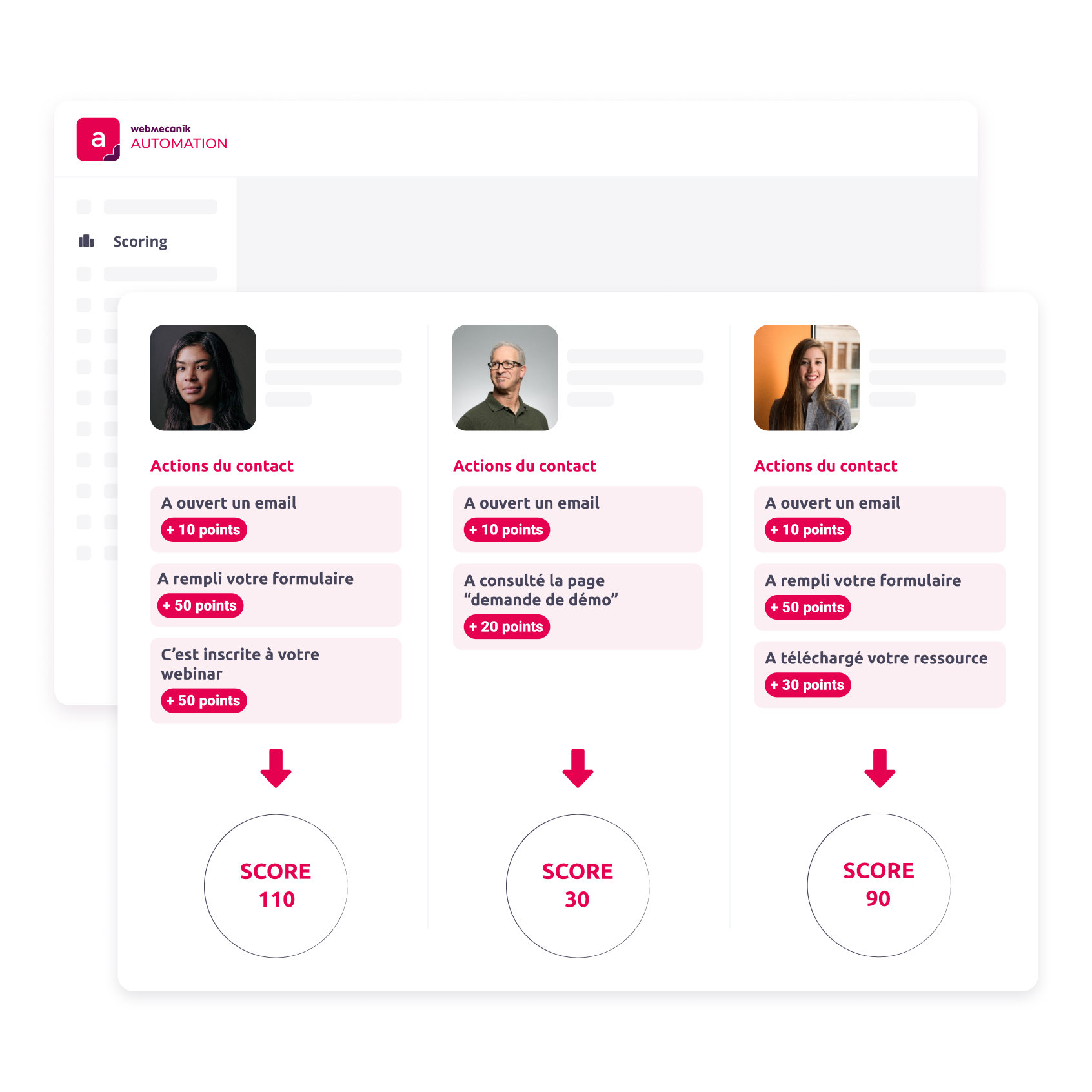
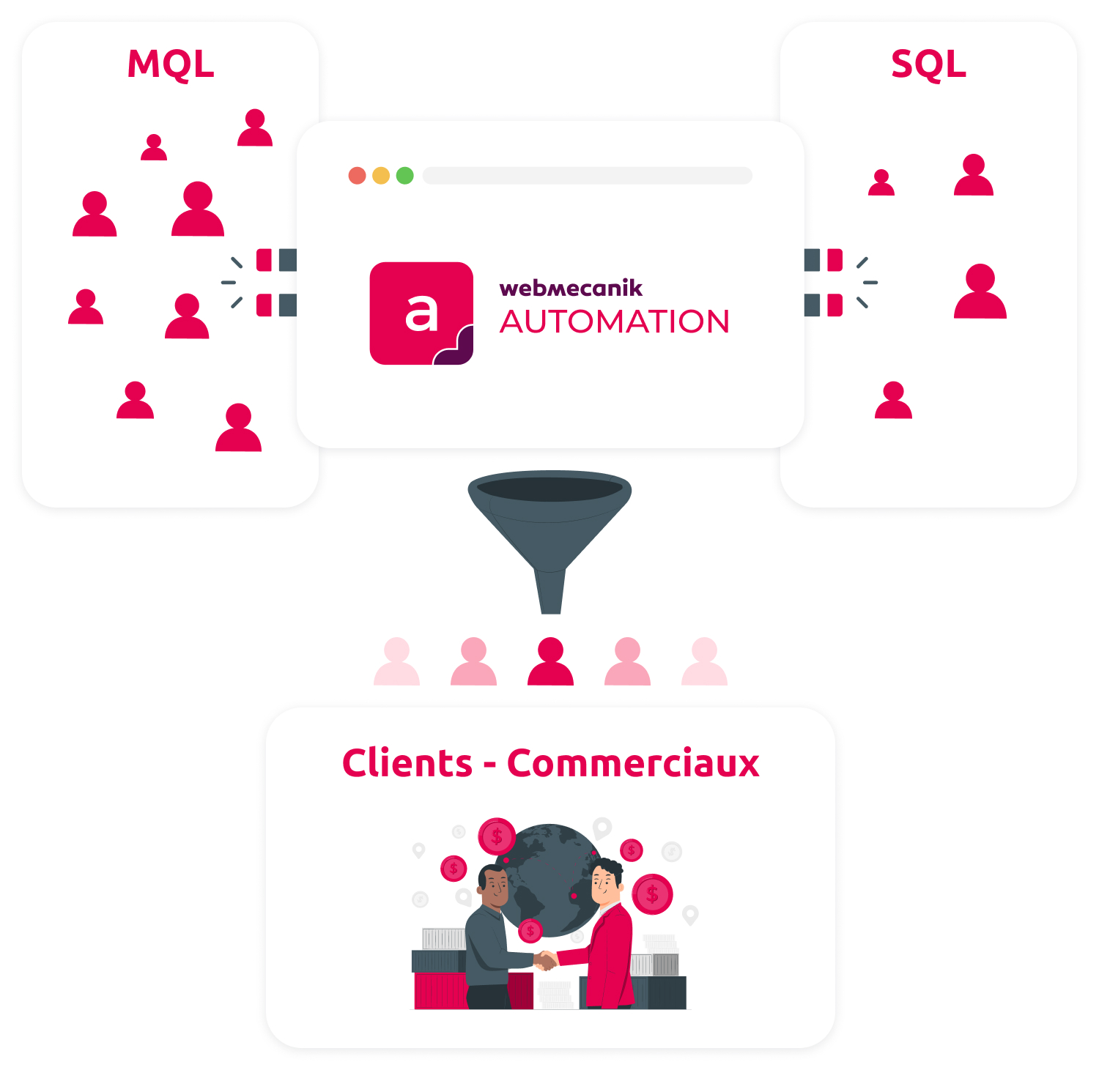
With the lead scoring feature, available in some marketing automation software, every prospect action (visiting a strategic page, downloading, registering for a webinar…) is assigned a value. You set up an automatic scoring system that lets you evaluate, in real time, each contact’s level of interest and maturity. This enables you to structure dynamic, actionable segments to guide your efforts: nurturing for cold leads, follow-up campaigns for warm prospects, and passing to sales for hot leads. And above all, you gain clear visibility into your acquisition funnel. You know how many leads are in discovery, evaluation, and decision stages. You anticipate friction points. And you can manage your priorities proactively. |
 |
Accelerate the sales cycle with automated workflows
| Once the leads are qualified, the challenge is to streamline their path to purchase. Marketing automation makes it possible to create workflows tailored to each stage of the funnel, to avoid losing momentum and increase conversions.
For example, a MQL (Marketing Qualified Lead) who has downloaded an eBook can automatically enter a scenario containing an industry case study, a customer testimonial, and then an invitation to book a meeting. Behind this workflow, each interaction recalibrates its score. A sales alert is then sent when a certain threshold is reached. Once the demo is completed, you can automate a post-meeting sequence including social proof, personalized reminders, and short-timeline messages to create urgency. And it doesn’t stop at the sale. The automation helps you support your customers during their activation and adoption phase, with guided campaigns, contextual help content, and proactive upsell campaigns. |
 |
Keep a prospect engaged after an event
Webinars and other in-person events are excellent ways to generate leads for SaaS. But these leads are often lukewarm and poorly handled. It’s common to see that after a webinar, no real follow-up is done—or it’s done in a way that’s too generic.
With marketing automation, you can set up a structured post-event sequence. It starts with a thank-you email including the replay, followed by additional content and an offer to book a meeting or start a free trial. Based on lead behavior (present or absent, number of interactions), you guide what comes next: gentle follow-up, an invitation to another piece of content, or a sales call if the scoring indicates it.
Once again, you automate a critical moment while personalizing the prospect’s experience.
Generate upsell and cross-sell without effort
| Too often, marketing efforts focus exclusively on acquisition, while your existing customers are a goldmine for your ARR. Marketing automation lets you fully harness this potential by setting up automated upsell and cross-sell campaigns.
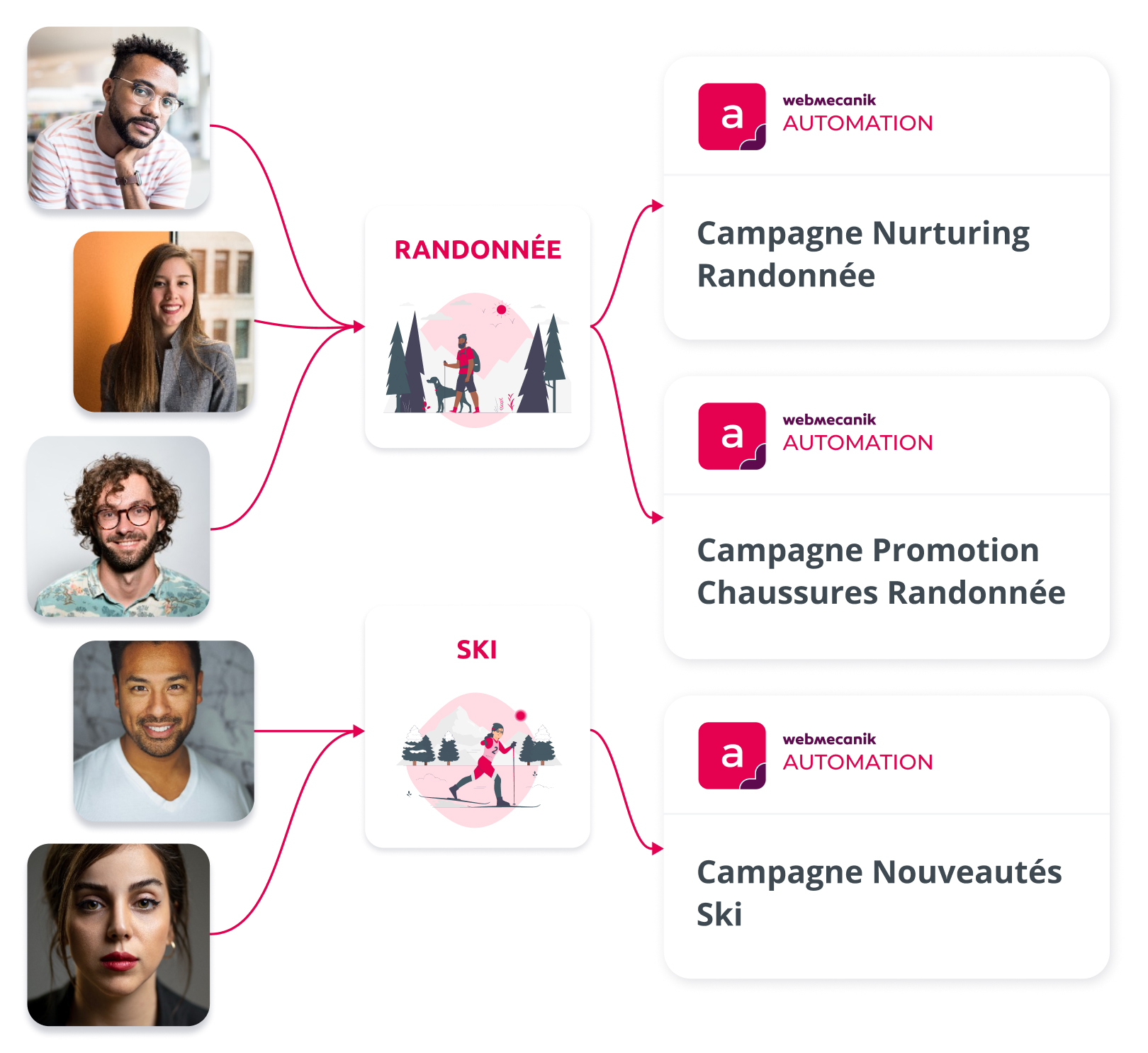
By analyzing how your customers use your product, you can trigger personalized sequences: for example, if a user accesses a premium feature multiple times without having access rights, they receive an invitation to try it or upgrade. Similarly, on the subscription anniversary date, a campaign can propose a plan upgrade, along with the associated benefits. You can also design quarterly campaigns that highlight lesser-known modules, using customer testimonials or targeted demos. These campaigns, even though fully automated, give the impression of ultra-personalized communication. |
 |
Reduce churn and build loyalty intelligently
Churn is the silent enemy of your ARR. It often sets in without making noise, through a gradual decline in engagement, latent dissatisfaction, or a lack of human connection. Once again, automation can play a key role.
You can trigger reactivation scenarios as soon as a customer becomes inactive for a certain period: sending a weekly tip, exclusive content, or a personalized check-in message. A disengagement score can also be set up to alert your teams when early warning signals appear.
Other scenarios aim to strengthen the relationship over time: automated satisfaction surveys, ambassador programs, or referral offers. These are ways to turn your customers into growth advocates… and solidify your ARR.
Align marketing and sales around a common goal
Marketing automation plays a key role in the collaboration between your marketing and sales teams. Too often, sales teams believe leads aren’t ready, while marketers struggle to demonstrate their impact.
With a well-configured automation platform, sales teams receive contextualized, scored leads, along with an accurate history of actions (content viewed, emails opened, interactions). Marketing, on its side, can track conversion rates, refine its scenarios, and adapt messages based on field feedback.
This way, marketing and sales teams experience less friction, achieve better closing rates, and make better use of the sales pipeline.
Conclusion
Growing your ARR isn’t only a matter of acquisition volume or sales force strength. It’s a deeper, ongoing effort to structure every stage of the customer lifecycle to maximize its impact.
Marketing automation allows you to orchestrate this work in an intelligent, measurable, and scalable way. It helps you qualify your leads, shorten your sales cycles, retain your customers, and increase their value over time.
You manage a SaaS and want to grow your ARR without necessarily increasing your marketing or sales budgets? At Webmecanik, we support many SaaS publishers in structuring their acquisition, conversion, and upsell scenarios thanks to our marketing automation platform.