
Implementing an Inbound recruiting or Inbound HR methodology pursues the same objective as its marketing counterpart: growing the company.
Inbound recruiting is a recruitment strategy that aligns HR needs with candidate aspirations. From HR marketing to employer branding and career sites, all of these are levers integrated into this 3.0 recruitment strategy. Derived from Inbound Marketing, the inbound recruiting strategy is based on the same pillars and techniques. The objective is not only to raise awareness of the company (employer branding, brand content, community management) but also to position it on search engines (SEO, SEA, SEM) so that candidates can find it ahead of its competitors. Inbound recruiting thus includes content production, sharing on social networks, search engine optimization (organic or paid), email marketing, and Marketing Automation scenarios.
Where Inbound Marketing seeks to attract new customers, Inbound HR or Inbound Recruiting aims, for its part, to develop the company’s human potential by attracting the best talent.
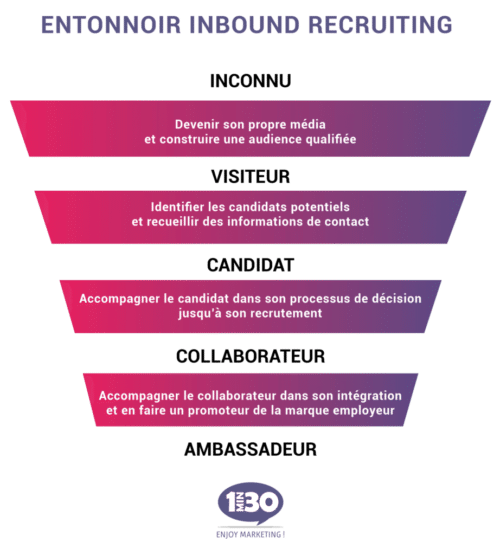
This methodology is based on 4 major phases:
- Attract qualified traffic to your employer brand media
- Generate applications and collect behavioral information on your employer brand site
- Nurture the potential candidate throughout their decision cycle until conversion into a hire
- Retain the employee during onboarding to turn them into an ambassador
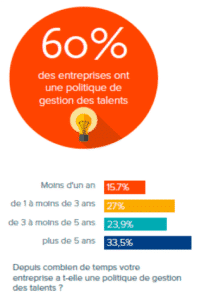 Fewer than 60% of companies take action on talent management. According to the study by ANDRH, Féfaur and Cornerstone OnDemand, this is mainly due to a lack of strategic consideration, which results in no specific budget, no managerial involvement, and finally no dedicated tools.
?Discover the Marketing Automation solution designed with Inbound Recruiting in mind.
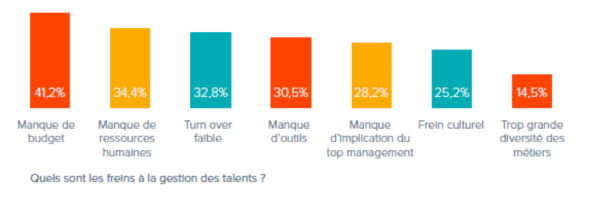
Source: erh.org
Attract qualified traffic to your employer brand media
The To-Do List
- Creation of Ideal Candidate profiles (or Candidate Personas)
- Writing quality blog articles (job profiles, introducing new hires, industry figures …)
- Optimization of keywords for search engines (organic SEO/SEO)
- Using social networks: LinkedIn, SlideShare, YouTube, Facebook, Twitter, Pinterest
In this first phase, the aim is to build a qualified audience with behavioral data (with Marketing Automation solutions) that update historical data in real time (with CRM- or ATS-type applications – Application Tracking System). This is decisive for the success of all the following actions. We first define the fundamentals of the employer brand, in order to determine the image positioning and the tone of the editorial content.
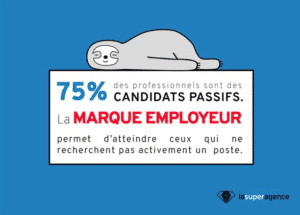
In order to clearly define the target and address it directly, its competency framework is determined. The jobs and skills management policy must here facilitate or complement the identification of the target and be taken into account in the editorial line. For example, under-25s with few qualifications for a fast-food chain, or 25-35-year-old graduates from top schools for the marketing teams of a major cosmetics group.
Source: La Super Agence
Now that you know who you are addressing, you begin your content production phase:
- creation of a career site or an HR blog,
- candidate journeys (the equivalent of the customer journey in marketing),
- writing white papers to provide useful information to candidates (internal or external),
- training internal teams to manage communication spaces.
You know your targets, you have produced the content, it is time to distribute it to your audience.
Your visitors with the potential to join your company can now move from unknown status to candidate status.
Generate applications and collect behavioral information on your employer brand site
The To-Do List
- Writing job offers designed to convert,
- Calls to action: call-to-actions (CTA) at the end of each of your blog articles and on the pages of your site as well as in Pop-Ups,
- Smart forms (progressive profiling) and/or pre-filled, as on the Webmecanik Automation solution,
- Track, score, and segment each visitor.
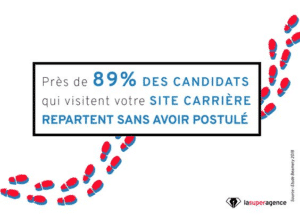
The qualified audience has been created; now the goal is to transform the visitor into a qualified contact and a candidate. User journeys, or customer journeys, will allow the visitor to leave us their behavioral AND declarative information. Still in exchange for a content-type gift (alerts, candidate handbook) or participation in an event (open days, meetings with employees in the role).
Source: La Super Agence
Here, marketing automation techniques feed the various distribution channels available and, once the information has been collected, make it possible to move on to the next stage: triggering the application and recruiting.
?Learn about Marketing Automation techniques for recruitment.
Nurture the potential candidate throughout their decision cycle until conversion into a hire
The To-Do List
- Nurturing, or the sending of relevant content – most often by email – designed according to the position and the level of maturity in the recruitment process
- Scoring, which makes it possible to measure a candidate’s potential and desires and thus save recruitment managers from this tedious task that is difficult to keep up to date
- Workflows – or scenarios – for application follow-up that are triggered automatically based on scoring elements and historical information
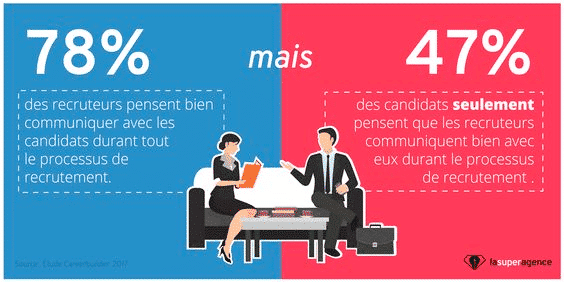
We have a qualified audience that has agreed to give us personal information directly (declared through forms or quizzes) or indirectly (via their browsing across the different content). This is now where the application and hiring take place.
The selected content must be appealing but also explain the issues more precisely in order to smoothly guide the candidate toward a decision.
Through newsletters or automatic email campaigns (which are sent when the scoring/segmentation level is appropriate), you showcase your employees, for example in the form of video testimonials.
Retain the employee during onboarding to turn them into an ambassador
The To-Do List
- So that they become ambassadors of your brand
- Reduce turnover, which is so costly for companies
- Improve reputation and brand image
Have you just hired someone? You now need to retain them and turn them into an ambassador for your company. This starts with an integration plan within the company. A true onboarding sequence that begins as soon as the commitment is formalized (synchronized with the Application Tracking System). There is no need to wait for the employee’s actual arrival to start telling them about the company and the environment they are joining. Offer them a discovery journey of your brand before they take up their role.
Do not forget that all of these attentions continue during the active period within the company but also at the time of departure (offboarding) and beyond (Alumni Club).
Conclusion
Inbound recruiting therefore allows companies to create a true brand image on the web, called employer branding, in order to build a close relationship with future candidates, whether passive (employed but attentive to the market) or active (actively looking for a new professional opportunity). Based on personalized and non-intrusive HR marketing, inbound recruiting makes it possible to go beyond conventional recruitment processes and to work on the deep desires and motivations of future employees, and on employee retention by encouraging conditions for internal mobility through the analysis of skills in addition to performance.
Need to know more about how to automate the relationship with your candidates? Watch our webinar replay “Join the 69% of companies that make lead conversion their #1 priority!”
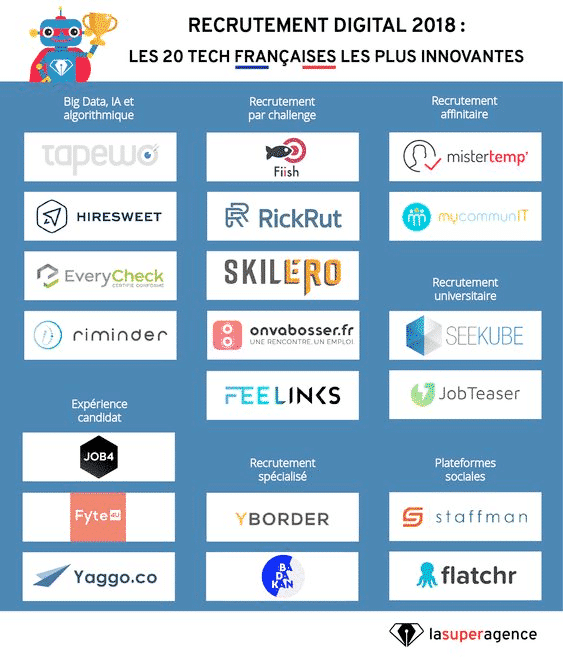
Finally, here is a comprehensive overview published by La Super Agence to learn everything about the latest cutting-edge technologies in inbound recruiting.