

If you’re still talking about omnichannel commerce, you’re behind the times. The new trend is unified commerce. Just a simple buzzword?
Not quite. As its name suggests, unified commerce is no longer just about connecting but about unifying channels, touchpoints, and customer data. This addresses a real challenge, both on the customer side (better experience) and on the organizational side (better productivity & performance).
This introductory article will give you the basics for understanding unified commerce: definition, example & benefits.
? Contents
- Unified commerce: what is it?
- The benefits of unified commerce for retailers
Unified commerce: what is it?
Definition
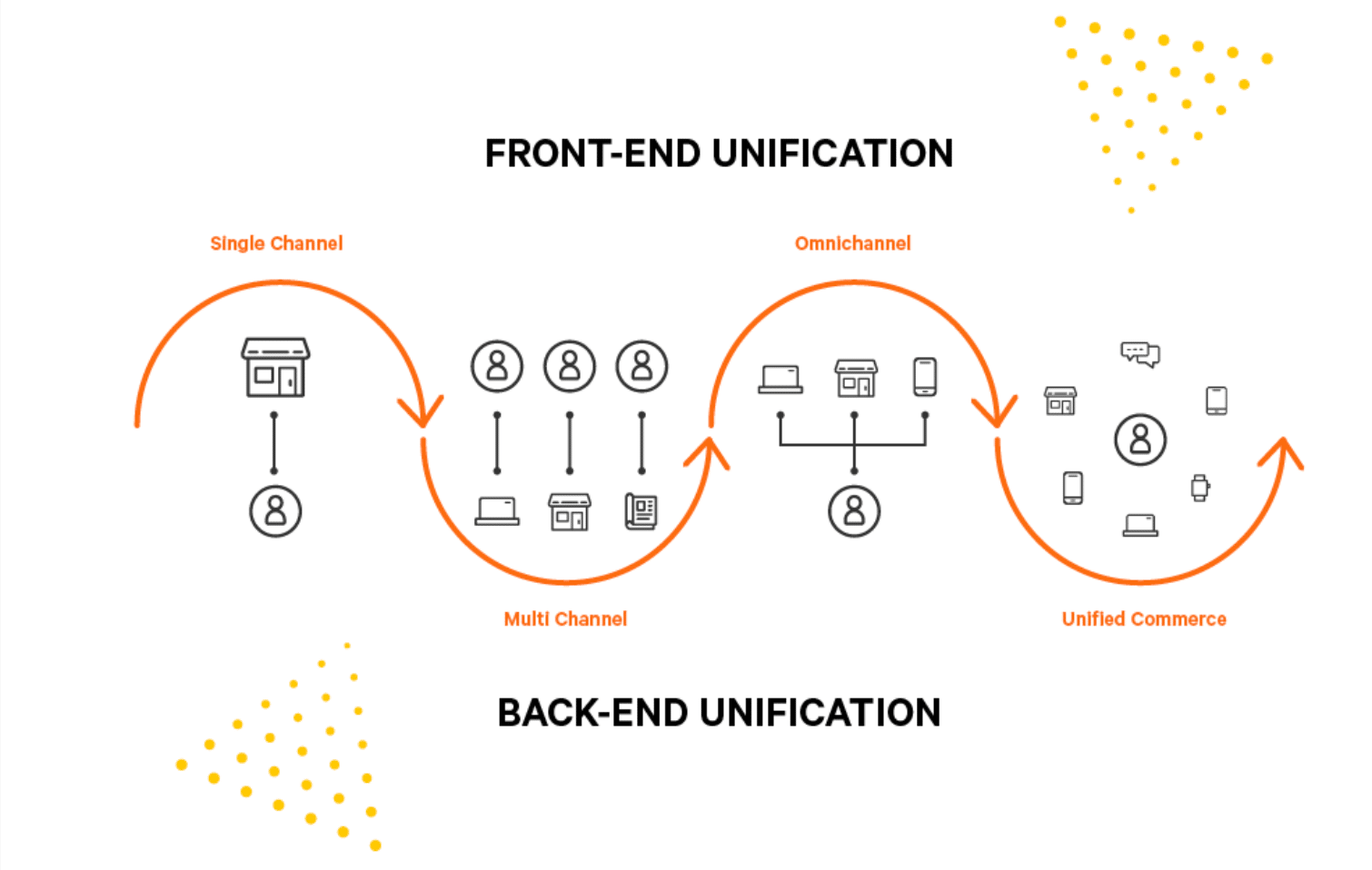
Unified commerce is a marketing concept that extends and goes beyond omnichannel. Where omnichannel leverages and cross-references as many touchpoints as possible to enrich the customer journey (e-commerce site, mobile app, social media, in-store point of sale), unified commerce will:
- Connect all these points of sale together
- Connect your backend activities (inventory, deliveries, order fulfillment, customer relations, purchase option…)
- Connect customer data (purchase history, email address, payment method…) regardless of the channel through which they interacted with you.
Unified commerce acts as a connector that brings together and synchronizes in real time each point of your business. The result is a consistent and uniform experience for the customer, and greater visibility and operational performance for you.
Unified Commerce VS Omnichannel
You are probably familiar with the example where the consumer completes their purchase in-store after viewing the product page on the website a few days earlier. There is another where this same consumer validates their cart on their computer and then switches to the brand’s mobile app to move on to the payment stage.
To adapt to these changes in consumption and usage, omnichannel aims to broaden its presence across as many touchpoints as possible: in-store, online, on mobile or via social media.
Source: Kibo Commerce[/caption]
The only downside is channel disparity. Each touchpoint evolves at its own pace independently of the others, due to a lack of synchronization. This is why many retailers only have a fragmented and incomplete view of the customer journey and can only personalize customer relations approximately. We have all already received the same message twice in our inbox or inappropriate messages that hinder our experience.
To address this, unified commerce gives pride of place to interoperability. It is an ecosystem around which all the points of your business revolve (points of sale, backend, customer data, etc.). The unified view that results from it makes it possible, for example, to update product availability and pricing in real time, or recommend them to the consumer.
Unified commerce in practice: example
Source: Business Insider
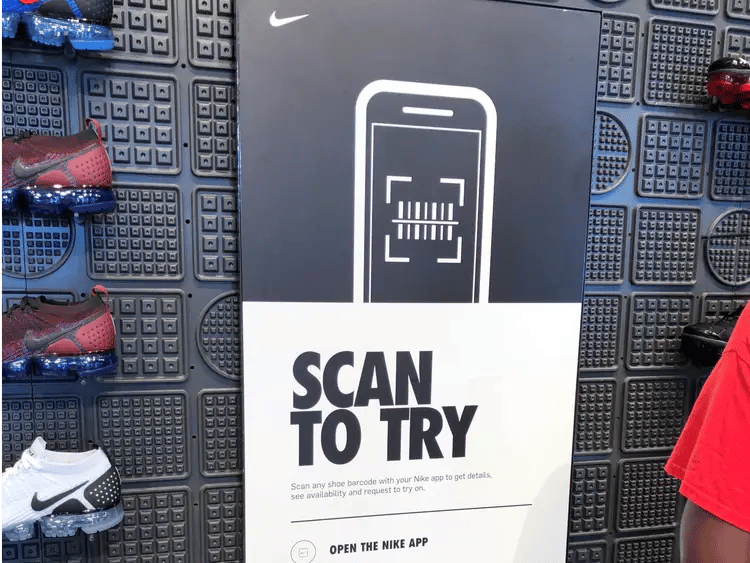
Nike was one of the first companies to invest in unified commerce. As a result, it was one of the first to be able to demonstrate its benefits (more than 82% additional revenue.
Here are some of the key benefits:
- Whatever the stage or location of the purchase, the consumer moves between several touchpoints without any friction. They can place an order online, come pick it up in a brand store, or buy it in-store and benefit from home delivery.
- Thanks to the coordination of physical and mobile points of sale, the purchasing process operates just-in-time. The result is less congested queues and more satisfied customers.
- Nike’s flagship app, Nike+, is connected to all the group’s points of sale, allowing anyone to scan QR codes and other barcodes to buy or interact with the brand. Finally, at the time of purchase, self-checkouts synchronize in real time with the payment method the user has set by default in their app.
- Finally, each member’s identifiers are connected to Nike’s entire ecosystem: website, mobile app, stores, to deliver personalized content consistent with the customer’s stage in their relationship with the brand.
Bottom line: nearly 900 million dollars generated just one year after using unified commerce.
The benefits of unified commerce for retailers
Here is a summary of the main benefits of unified commerce.
#1 A more flexible purchasing journey
Given the many touchpoints the consumer uses, it is easy to lose sight of them. They move through the purchasing journey and the channel by which to reach them whenever they wish: they can go window-shopping before ordering online the next day, add items to their cart before changing their mind a few hours later, opt for home delivery and finally choose a pickup point, etc…
With unified commerce, you benefit from a clear and comprehensive view of customer data that allows you to track consumer behavior regardless of their history with you. It is therefore easier to create or maintain a personalized relationship with them.
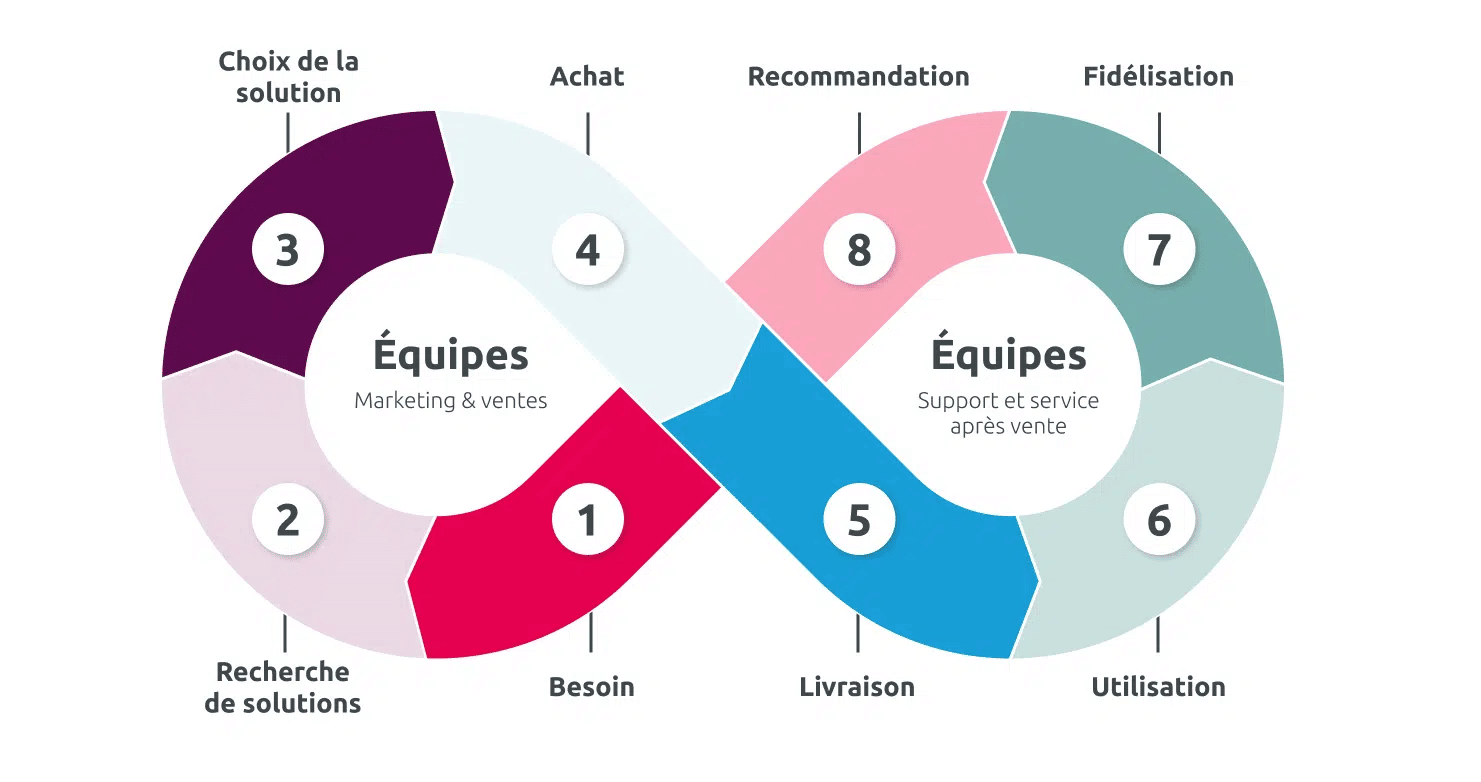
With coordinated management of orders, shipments and deliveries, you have the ability to carry out email and SMS campaigns via marketing automation. Indeed, by knowing what stage of the customer journey they are at, you will be able to send the consumer the right message on the appropriate medium (only once).
Source: Florian Valt from Webmecanik
For example, you could:
- Send an email to all customers who bought shoes in-store one month after their purchase to gather their feedback on the product and customer service
- Send a different email to those who bought them online to gather their feedback on the product and order tracking.
#2 Precise tracking of customer relationships
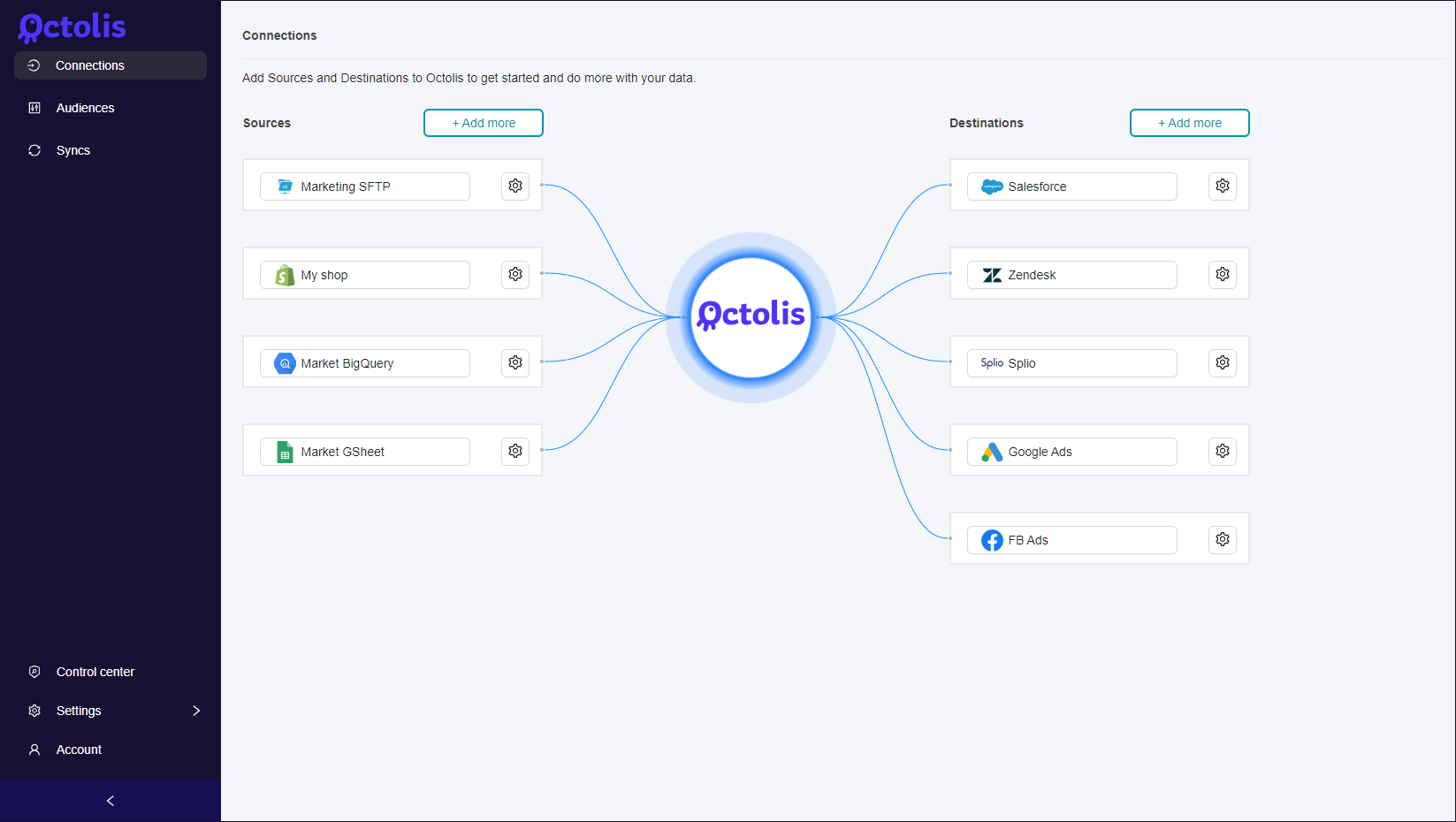
You can track, adjust, modify and anticipate every customer data point in the same place. The result is a personalized and more appropriate response. Some software solutions make it possible to achieve this result, such as Octolis. A solution that unifies, cleans, scores and synchronizes customer and marketing data in your operational tools.
Source: Octolis
#3 The ability to offer a personalized shopping experience
As you will have understood, if orders are centralized in the same place, it will be easier to identify trends or use cases from them. By relying on purchase frequency and history, for example, retailers can offer or even anticipate promotional messages and personalized journeys for each of their customers.
This fine-grained data analysis also allows your in-store sales staff to have a better understanding of customers.
#4 More transparency with customers
If there is one thing consumers cannot stand when making their decision, it is a lack of information or, worse, bad information! A product unavailable even though it is still on the webpage, price discrepancies between the website and the store, or items nowhere to be found in-store when the website told you the opposite…
With unified commerce:
- Unified inventory management provides greater visibility, helping determine the (possible) stockout of a product and synchronize the various points of sale
- Prices are reliable because they are coordinated in the same place.
#5 Easier product exchanges and returns
Do you want to exchange your product on the website but you lost the receipt you were given in-store? You just have to enter your customer ID to retrieve your entire purchase history.
Do you want to return T-shirts to a different store from the one where you bought them? That is still possible with unified commerce because any point of sale is synchronized with another via a common platform.
#6 More efficient staff management
We have presented the benefits for retailers and consumers, but what about employees?
Centralizing everything in one place is particularly beneficial for onboarding and continuous employee training. They no longer need to navigate or remember the password for this or that tool; everything is in one place.
To conclude, unified commerce addresses the limitations of omnichannel: unified management of points of sale, inventory, orders, shipments, deliveries, data and customer relationships. The result is greater flexibility, personalization, transparency and operational performance. And this benefits many players: retailers, consumers and employees. By embracing unified commerce, you may never see your customers the same way again…and neither will they.