

What is a Marketing Tag?
In the world of digital marketing, the Marketing Tag is a useful asset to consider for your marketing campaigns. Put simply, it is a marker or label that indicates an annotation associated with a contact. It is a form of simple and quick segmentation of your contacts based on the use of keywords. This way, you can easily form groups and deliver the right message at the right time to the right people.
For example, a contact acquired from a trade show can be assigned a “trade show” label. It then becomes easier to group all your trade show prospects together using that tag (as a bonus, you know where your leads came from?).
These tags can also be directly linked to your CRM tags to unify your targeting between your marketing and sales software.
Also read: How to effectively segment a database: marketing techniques and tips
How can you organize your marketing campaigns using marketing tags?
An effective marketing strategy requires good organization, and marketing tags are a key tool in that process. Personalize your digital campaigns and target the needs and expectations of your prospects and customers with precision.
At Webmecanik, we use them when we organize an event (a webinar, for example) or during automation campaigns. What’s more, managing 2 different tags is quite simple; managing around twenty tags at once quickly becomes much more complicated. That is why our marketing tag manager is simple and accessible, allowing effective visualization of data from tags so you can make use of this information. You can view the number of contacts associated with each tag and create or delete tags for greater flexibility over time.
You can also edit the tag description to add more context, so your team is informed about the objectives associated with a tag. This allows you to create marketing automation campaigns based on marketing tags to personalize your communications according to the tag associated with a contact. In short, everything you need to manage your contacts in your optimized conversion funnel.
Effectively structure your marketing campaigns.
Here are the key steps to structuring your marketing campaigns:
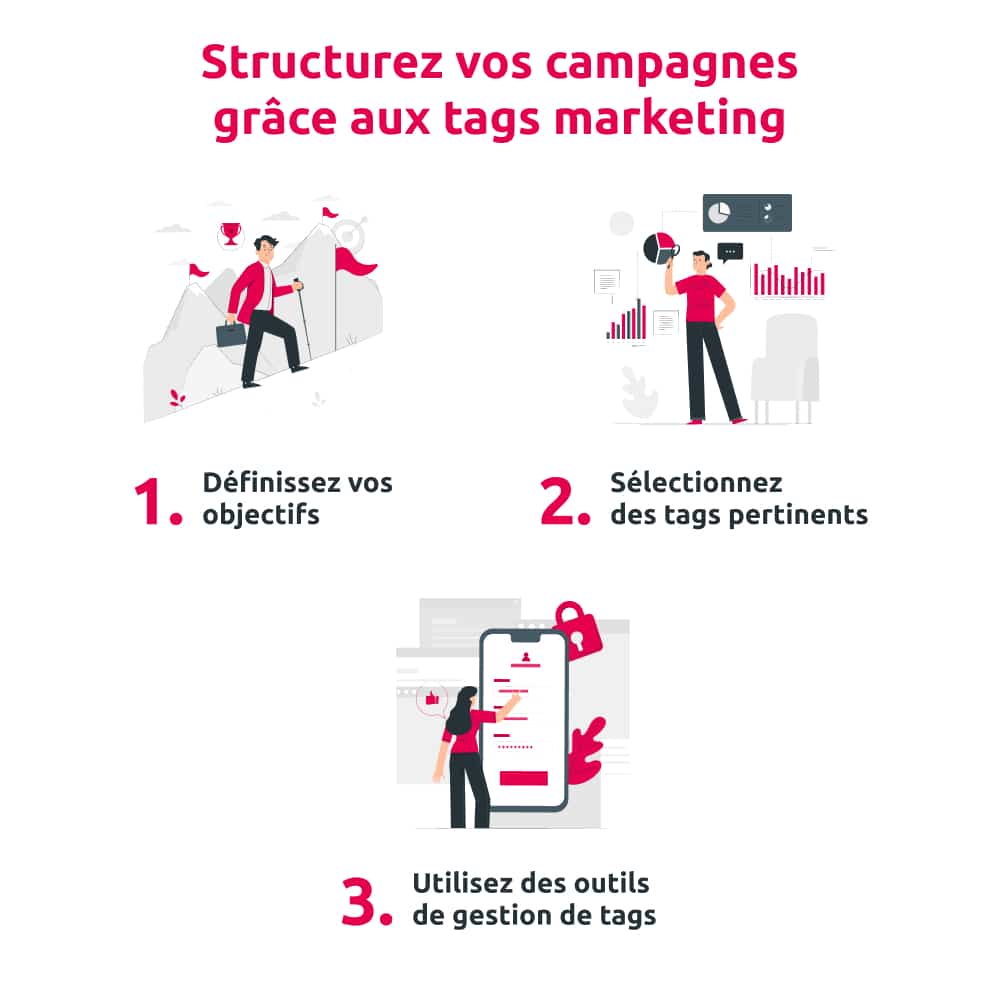
Define marketing objectives: clarify your objectives before creating or launching a campaign. This will make it easier to associate your marketing tag with specific contacts. Whether it is to segment your database more effectively, improve lead tracking, or analyze the communication channels that generate the most sales.
Select relevant tags: your objectives will guide your choices, adapted to your needs. Create several marketing tags so that the entire marketing and sales team adopts their use and consistency.
Use marketing tag management tools: for optimal management, use specialized tools that simplify the setup and tracking of tags, ensuring data accuracy for performance analysis, such as Webmecanik Automation.
Also read: Use cases for segmentation with Webmecanik
By integrating marketing tags into your digital marketing strategy, you enrich your knowledge of your customers and prospects. It is a real marketing advantage for digital specialists, marketers, and digital marketing agencies looking to automate and track the KPIs of their marketing campaigns.