

Lead generation is the art of capturing, qualifying, and converting anonymous contacts into qualified contacts for the sales team. In this sense, finding new customers can prove to be a tedious task. To support you, several tools or techniques exist to maximize your efforts in terms of lead generation. For example, you can use the Inbound Marketing technique to offer rich content with the goal of generating interest.
Some Marketing Automation software solutions, such as Webmecanik, focus on capturing contacts through specific channels (forms, marketing resources, landing pages, SMS, WhatsApp, etc.).
Lead generation starts with capturing visitors to your website
Offer value in exchange for information
Lead generation relies on properly qualifying your database
Increase interest with nurturing
Engage and convert your prospects
What is a lead?
A lead, in a marketing or sales context, refers to an individual or organization that has shown interest in the products or services your company offers. This interest is generally expressed by a specific action, such as filling out an online form, subscribing to a newsletter, downloading a document, or any interaction indicating a desire to receive more information from you.
Understanding the value of a lead and visualizing it in the conversion funnel
The value of a lead lies in its potential to become a customer. However, not all leads have the same level of interest or readiness to buy. This is why lead qualification is an important step, making it possible to distinguish hot leads, who are ready to make a purchase or speak with a sales representative, from cold leads, who require more nurturing before reaching this stage. This distinction helps marketing and sales teams allocate their resources more effectively, by focusing on the most promising prospects to maximize conversion rates.
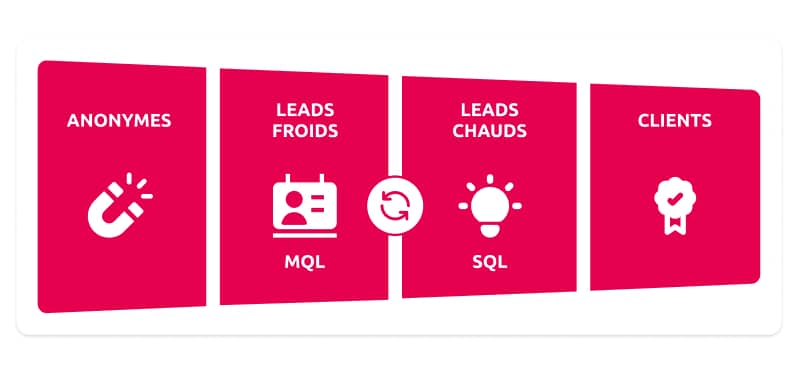
Capturing an individual’s interest
In this process, lead generation is therefore the first step toward building a relationship with potential prospects. By capturing a visitor’s interest and converting them into a lead, you create an opportunity for your company to communicate directly with them, provide them with additional information, and guide them throughout the customer journey. Whether through targeted email campaigns, personalized interactions, or the provision of quality content, each action aims to strengthen the relationship and transform initial interest into purchase intent, ultimately leading to the acquisition of a new customer.
Lead generation starts with capturing visitors to your website
Every visitor who comes to your site represents a valuable opportunity. Your website should therefore be used as an acquisition lever. Thanks to lead capture tools, you can turn these visitors into qualified prospects. You can use customizable landing pages and strategically placed calls to action to encourage your visitors to take concrete actions:
- Subscribe to company communications (newsletters)
- Download exclusive content such as a lead magnet
- Provide impactful marketing resources
Each interaction then becomes an opportunity to establish a tangible connection with your potential customers, thus paving the way for targeted lead generation.
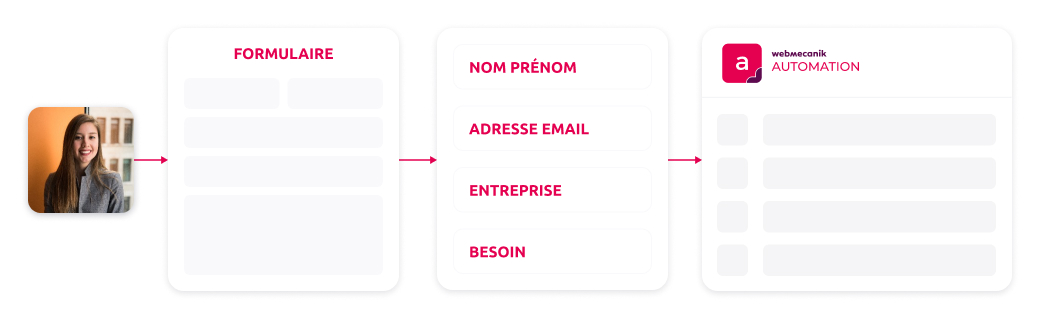
Offer value in exchange for information
Generating leads is not limited to the capture phase on a website or the purchase of an existing prospecting file. The modern inbound marketing approach is based on exchanging high-quality content for valuable information about your prospects. For example, you can offer a webinar on a topic that will bring strong added value to people or companies in your target audience.
By leveraging interactive platforms such as Livestorm, you can not only offer these enriching webinars but also simplify the registration process, asking participants to provide key information beforehand. This process turns each registration into a valuable lead opportunity. The data collected — whether email addresses, specific areas of interest, or levels of expertise — provide a solid foundation for personalized follow-up actions. Thus, after the event, you have a rich and segmented database for targeted campaigns aimed at converting participants into qualified leads.
This strategy is not limited to webinars either. It extends to various formats such as white papers, case studies, product demonstrations, and more. Each piece of content offered should be designed to answer your audience’s questions and needs, encouraging prospects to engage willingly with your brand in exchange for valuable insights. Ultimately, the goal is to build a relationship of trust and value, laying the foundations for a successful customer journey and transforming initial interest into long-term commitments.

Lead generation relies on properly qualifying your database
Generating qualified leads is only possible with precise qualification of your contact database. Once your visitors are engaged, it is important to qualify them. In this sense, tools like Webmecanik allow you to analyze the behavior of your visitors on your site: pages visited, documents downloaded, and other measurable actions. Thanks to segmentation rules, you can thus organize your contacts based on predefined characteristics and adapt your communications accordingly. Defining a solid contact qualification strategy makes it possible to obtain qualified leads for your sales teams.
Increase interest with nurturing
Nurturing is at the heart of lead conversion. Use email, push notifications, SMS, and sales notifications to maintain contact with your prospects at every stage of their journey. Highlight relevant messages and content according to their progress in your conversion funnel or sales cycle, while using the lead scoring feature to identify the most promising leads. Lead nurturing is an important element of your digital strategy for generating qualified leads. Your sales teams will thank you for it!
Engage and convert your prospects
Adapt your communications according to the information collected by Webmecanik Automation. Personalize your prospects’ experience with specific content that will help them get through the final stages of the purchasing process. Use techniques built into your marketing automation software, such as lead scoring, to determine the optimal time for conversion. Implementing a conversion-based strategy will be useful to provide your sales teams with qualified leads.
conclusion
Lead generation is essential for business growth, combining strategies such as inbound marketing and marketing automation to turn prospects into loyal customers. This process goes beyond simply collecting contacts; it is about building lasting relationships by consistently offering value through relevant content and personalized interactions. Companies must adopt a customer-centric approach and use data to personalize the user experience, thus optimizing their lead generation efforts.