
CRM stands for Customer Relationship Management. It is a term that often refers to software, but literally has a broader meaning: customer relationships are an essential aspect not to be overlooked, requiring thoughtful and organized management.
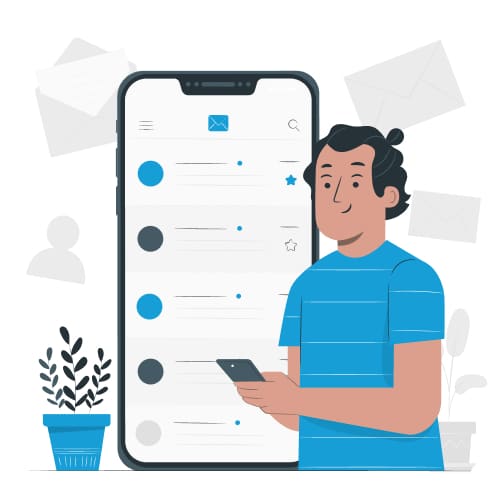
What is a CRM?
Definition
When we talk about CRM software, we mean an ally for managing relationships with your contacts. A customer or prospect is king in a business, customer or user experience is becoming increasingly important, and that is why CRMs are more popular than ever. These tools are here to help with personalization and improve the customer journey.
Free CRM
Among the CRMs on the market, many are free or offer a free version for a limited number of contacts or users and basic features. This allows any company to afford a tool to improve customer relationships!
Pros: the “price”
Cons: beware of unpleasant surprises when you exceed the free plan
French CRM
There are an extremely large number of CRM tools on the market. So there are French and European CRMs! If you like buying local, this is the ideal solution! Indeed, this software is in your native language, making it easier to get started, but above all, the data is very often hosted in France or Europe. And if you care about your prospects, you protect them, right?
Pros: data protection and ease of getting started
Cons: I’m still looking!
Mobile CRM
A salesperson is sometimes meant to be out in the field. Wherever they are, access to information about their contacts is essential. To answer an unexpected call, note the details of a meeting as quickly as possible, etc. A mobile app is often a significant plus!
Pros: convenience!
Cons: both interfaces must be well designed so they do not require two very different learning curves. The features must also be the same.
CRM and company size
Which CRM for which company? That’s the big question. A large group will sometimes turn to a very comprehensive CRM or, worse, several of them, to meet the inevitably numerous needs of different departments.
A self-employed entrepreneur or a small business will sometimes drag their feet when it comes to implementing a dedicated tool. Why is that a mistake? If you are a small business, get into the habit as quickly as possible and gather your prospect information properly.
If you are part of the large enterprise crowd that compulsively multiplies CRMs, stop everything! Let’s take a breath and talk about it. You want to meet all your teams’ needs, which is great, but it comes at the expense of data and customer experience, since a client from one business line may not be in another’s CRM. I have a solution for you. Choose software that can be synchronized, with a single more basic CRM (perhaps even free?) and complement it with specialized solutions. You will meet all your teams’ needs, and your contacts will appreciate the follow-up!
Pros: price, customer experience, and user experience
Cons: once again, I’m still looking!
What is customer relationship management?
Customer relationships are based on 5 important points:
- Listening
- Strategy
- Software
- Customer experience
- Multichannel
Indeed, the priority is to listen to your contacts. It is essential to understand them, know their needs, their concerns, and their expectations. It is also through this step that you build a relationship of trust with them.
Then, based on the information collected by listening to your contacts, a strategy must be developed. Your brand and product positioning, the company’s values, the message to deliver through the sales pitch—these are all things that must be defined.
It is now time to use a suitable tool to help your team implement this strategy. Your needs, and therefore the specifications for the right tool, stem from your strategy.
Customer experience also comes into play. The goal now is to understand the buying journey in order to guide them as effectively as possible. Then comes the last point: the communication channel used to interact with your prospects. One piece of advice: multiply your means of communication!
What are the customer relationship management tools?
CRM
Salespeople’s favorite (and sometimes dreaded) tool: the CRM! Useful for storing and organizing contact information, planning meetings, storing offers, viewing the sales pipeline, and gaining visibility into upcoming opportunities, CRMs are truly essential for customer relationship management. They are involved throughout the customer lifecycle.
Chat
Increasingly popular, often combined with artificial intelligence, I have the honor of introducing chat!
This service enables a direct relationship with the contact, who comes to you of their own accord. It is a real plus, but it requires human resources and can be disappointing if it is not responsive enough.
Marketing Automation
Increasingly well-known and widely used, marketing automation is here to automate time-consuming marketing tasks. With many features, it also brings more personalization, notably by collecting, storing, and organizing data sent by contacts. It is especially involved at the beginning of the relationship. Used by several departments, it can generally be connected to a CRM for even greater efficiency and more generated sales.
FAQ
To reassure a prospect, the FAQ is essential. Simple to set up, it can also sometimes be a little limited. Feel free to give it a second life, especially by including clearer and more comprehensive videos.
|
CRM |
Chat |
Marketing automation |
FAQ |
|
|
Customer data organization |
X |
X |
||
|
Communication planning |
X |
X |
||
|
Personalization |
X |
X |
X |
|
|
Interaction |
X |
X |
X |
|
|
Trust-building |
X |
X |
Customer relationship management is a full-fledged challenge. A CRM can be a very powerful tool if it is well chosen and fits within a thoughtful approach and strategy. The most important rule is knowing your prospects and your target audience in order to harmonize all of this! The ball is in your court!