
There is an approach in lead generation strategies that consists of setting up a scale of “lead stages,” the steps our leads will go through.
I am often asked the question “What exactly does that involve? But why do it?“. Here I will provide a few elements of an answer.
Essential for measuring ROI
If you want to be among the best in your lead generation program, lead stage management is key. It is imperative to stay in control of your leads at each of their stages.
Why? Because by doing so, you will have better reporting, the ability to establish an accurate forecast, and clear visibility into your return on investment.
How should you proceed?
First, you need to identify the different stages a prospect goes through from the very beginning to the very end.
Here is an example of a custom structure (for the software industry) that is slightly different from a traditional structure (Prospect -> MQL -> SAL -> SQL -> Customer).
| Prospect – any individual in your database |
| Lead – identifiable and shows interest in your products |
| Qualified Lead – the sales team has had an interaction with them, demo request, call… |
| Imminent Opportunity – demo completed or free trial in progress |
| Opportunity – full needs assessment |
| Proposal – quote issued |
| Closed Won – became a customer |
Based on these different lead stages, I created a simple spreadsheet with each of the estimated conversion rates from one stage to the next.
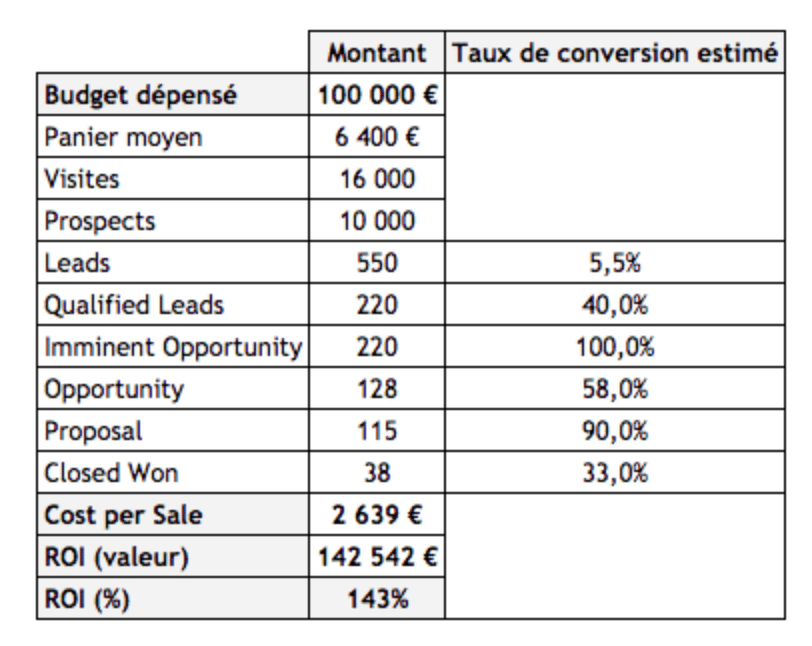
There you have it. You can calculate your ROI and forecast the revenue you will generate in the coming weeks if you are able to estimate how many prospects you will generate via your AdWords campaigns, a trade show, or your organic search.
What if we automated all this to gain accuracy and efficiency?
Indeed, why not? What if we tried to integrate all this into our Marketing Automation software by creating automatic rules to move a lead from one stage to another based on their progress in our “sales funnel”?
You can do this quite easily with your nurturing campaigns by triggering a change in your contact’s lead stage based on a specific activity or behavior, information related to the contact’s profile, or a data change made by your salesperson and entered into your CRM.
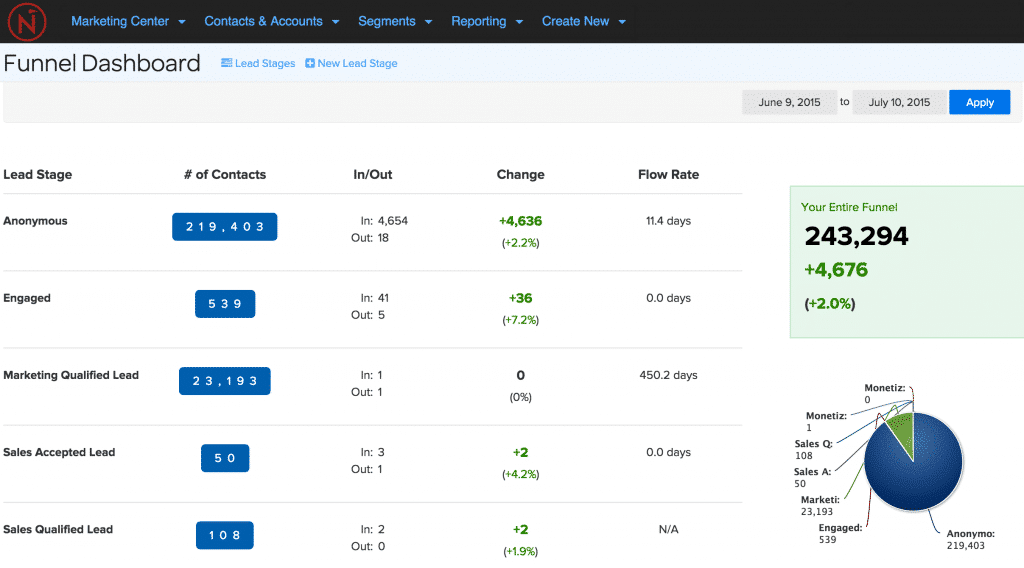
By taking the time to define your lead stage scale, you will have better visibility into your forecast and you will be able to produce increasingly reliable and relevant reports like this one, for example.
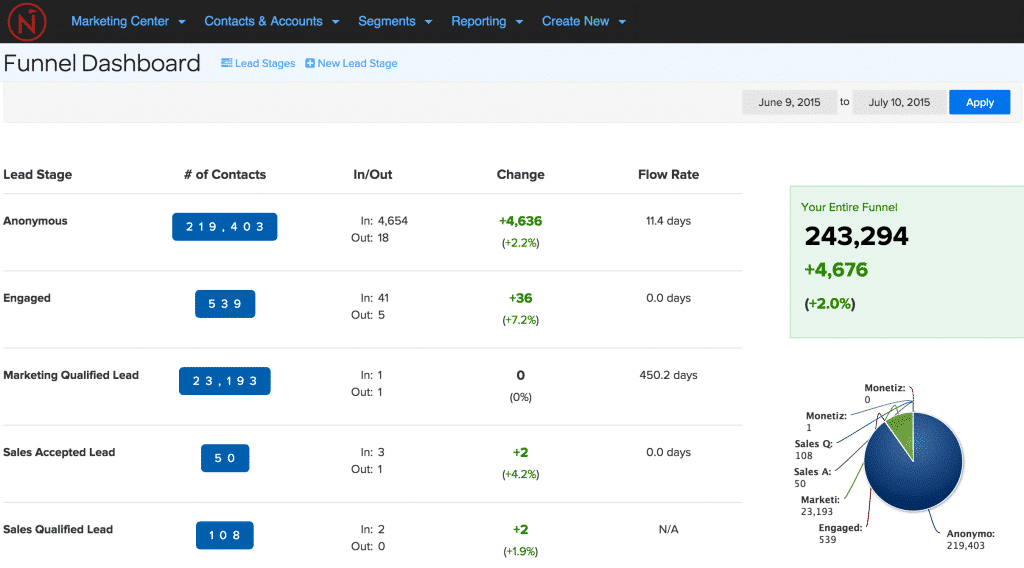
A dashboard, updated in real time on the performance and relevance of your lead acquisition strategy (here using the Webmecanik Marketing Automation software), will allow you to get closer to the most proactive and most detailed analysis on the market.
Good luck, and if you have any questions… ask us!