
Paid acquisition campaigns : how to boost their performance by combining them with marketing automation ?
The rollout of acquisition strategies based only on primary KPIs is a given for most advertisers. We’ll see that highly effective strategies can be deployed based on so-called “secondary” performance indicators (newsletter subscription, downloading resources, webinar registration…).
A well-designed lead nurturing strategy indeed makes it possible to start the conversation with users (prospects or customers) and move them forward through the conversion funnel. Objective : increase the performance of your Google Ads campaigns.
To achieve this, we can define two types of standard scenarios depending on whether they involve customers or prospects. Of course, you can also nuance the approach depending on whether you’re targeting the B2B or B2C market. But the first step is to identify, or even create, these new indicators.
Identify the best “secondary” objectives
Two main elements must be taken into account in order to maximize the chances of success of such a strategy :
- The potential of KPIs in terms of volume : in fact, it’s pointless to try to leverage
indicators with search and impression volumes that are too low.
Especially if doing so requires the creation of the indicator. - The relevance of KPIs relative to the advertiser’s objective : it’s pointless to waste
time and money on indicators that would not be qualitative enough.
Once these indicators have been identified and created, it’s time to deploy a robust and reliable tagging plan. The best solution in this regard is Google Tag Manager, which can be deployed across all of the main ad networks: Adwords, Facebook, Bing,…
Finally and unlike “primary” performance indicators, the analysis of these new indicators can be done through direct reading or in a “native” way.
Upsell or cross-sell scenarios
In almost 100% of cases, Google Ads paid acquisition campaigns target objectives or so-called primary KPIs, i.e. priority business objectives : purchases on an e-commerce site, or generation of sales leads on a service-oriented site (request for a quote or contact request).
Many paid clicks naturally do not lead to the primary conversion you’re looking for. That’s where the work of an experienced SEA Agency optimizing the conversion rate comes in, with the goal of converting as many paid clicks as possible into purchases or sales inquiries.
However, improving acquisition performance doesn’t stop there. This effort can be extended by implementing a relevant marketing automation strategy that makes it possible to retain customers and turn them into faithful, regular customers.
Let’s take an example in B2C. For a travel e-commerce site, for instance, it can involve creating an email scenario based on the products the customer purchased, and based on the product’s lifecycle.
For example, it can be relevant to suggest a series of tourist destinations ahead of the anniversary date of the previous year’s purchase, or in the run-up to the kids’ school holidays if that information has been provided.
The complementarity of the offers is obviously an interesting business opportunity. In service industries, it can make sense to offer insurance for unpaid risk to a company that has already taken out insurance for its offices, or for example civil liability.
Nurturing scenarios
In the same way, nurturing so-called secondary conversions can be extremely beneficial for increasing the performance of your Google Adwords campaigns.
Leads of the type newsletter subscriptions and resource downloads on your site, following a paid click, must receive your full attention. This is a business opportunity that will require little effort from you—users already know you and have shown, even indirectly, interest in your brand.
Marketing automation tools allow you to completely automate the conversation with them, which in the best case makes it possible to turn them into customers.
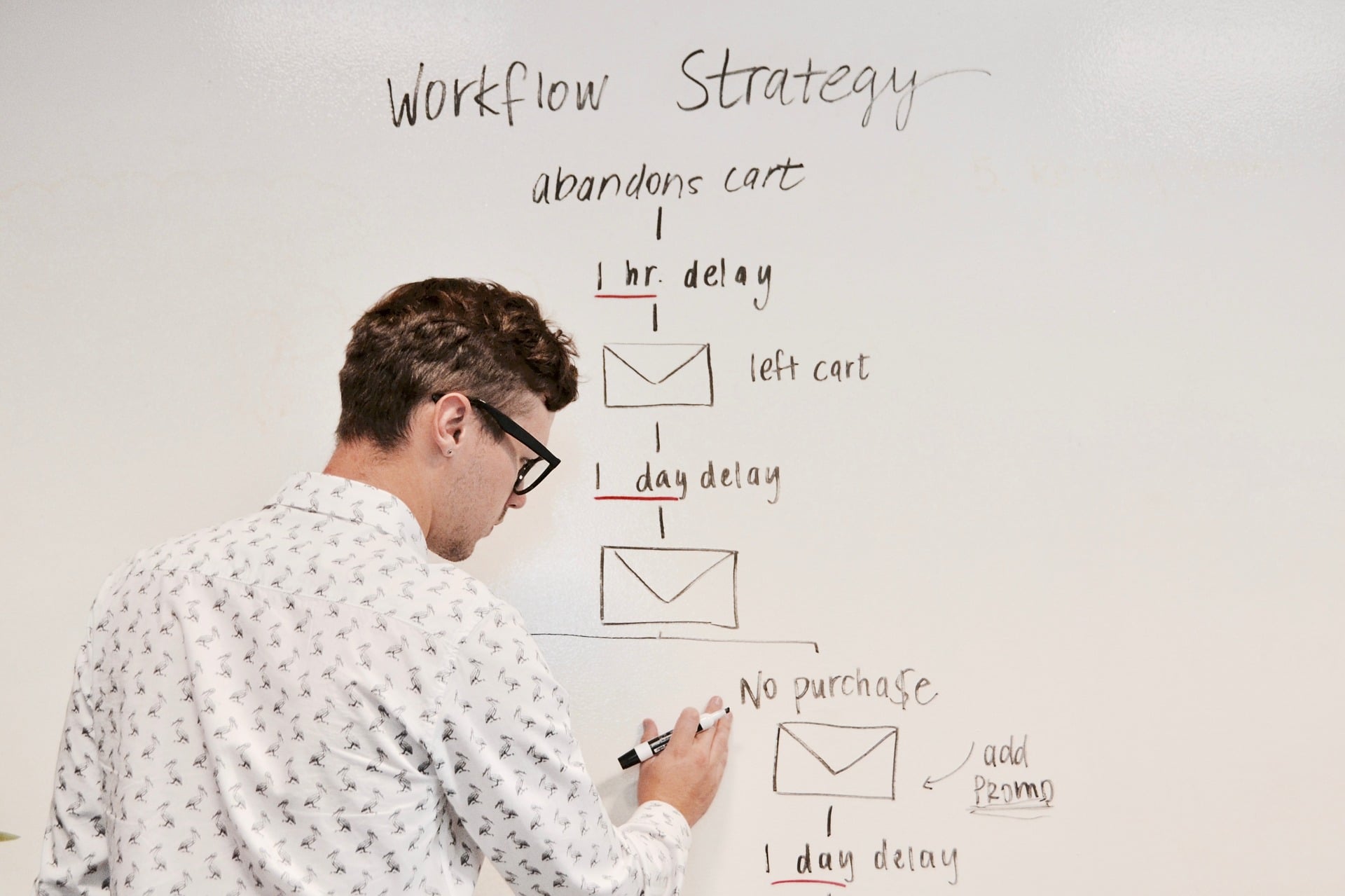
One example is worth 1000 speeches! In the context of a B2B acquisition strategy for a company supported by the agency Adwords Ekko Media, the rollout of a well-designed marketing automation strategy makes it possible to guide the user’s maturation by offering appropriate content.
That’s how a user who has expressed initial interest through a newsletter subscription will see themselves added to a conversion funnel enhanced with targeted content and calls to action (document downloads, visits to certain pages, clicks on certain links, watching a video, participation in a webinar).
These actions throughout the journey are tracked and make it possible to identify the user’s level of maturity, move them forward, or support them in the buying journey (awareness, consideration, decision) up to the purchase or the sales contact.
Long-term but fail-safe technique for increasing the conversion rate and performance of your Google Search and Google Display campaigns. Note that in the context of your paid search engine marketing campaigns, continuing to pursue secondary objectives also helps increase the audience pool and optimize bids. For this, read the article Conversion rate and visibility: how to use secondary performance indicators to boost them?
As you’ve understood marketing automation and Google Ads campaign synergies are strong in terms of the ROI of your advertising investments. This also naturally applies to your other acquisition levers: Social Ads or organic search engine optimization.