Lessons learned from Web Summit 2019
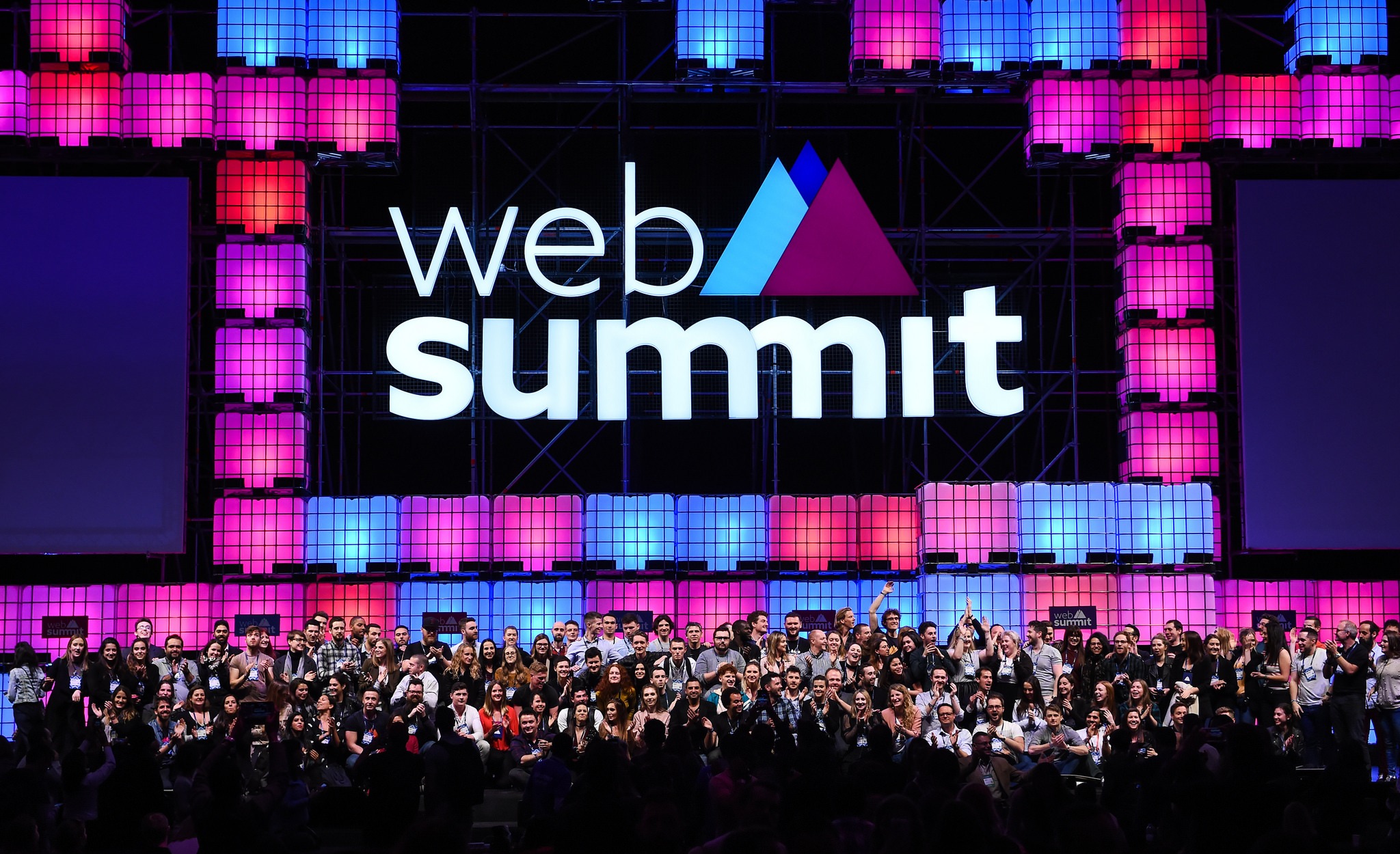
The Web Summit 2019 in a few figures:
- 70,000 attendees
- 1,200 speakers
- 170 countries
- Very wide-ranging topics: AI, Autotech, binate, musicnotes, planetech, robot talks, pub summit, Sports trade, Moneyconf, Healthconf…
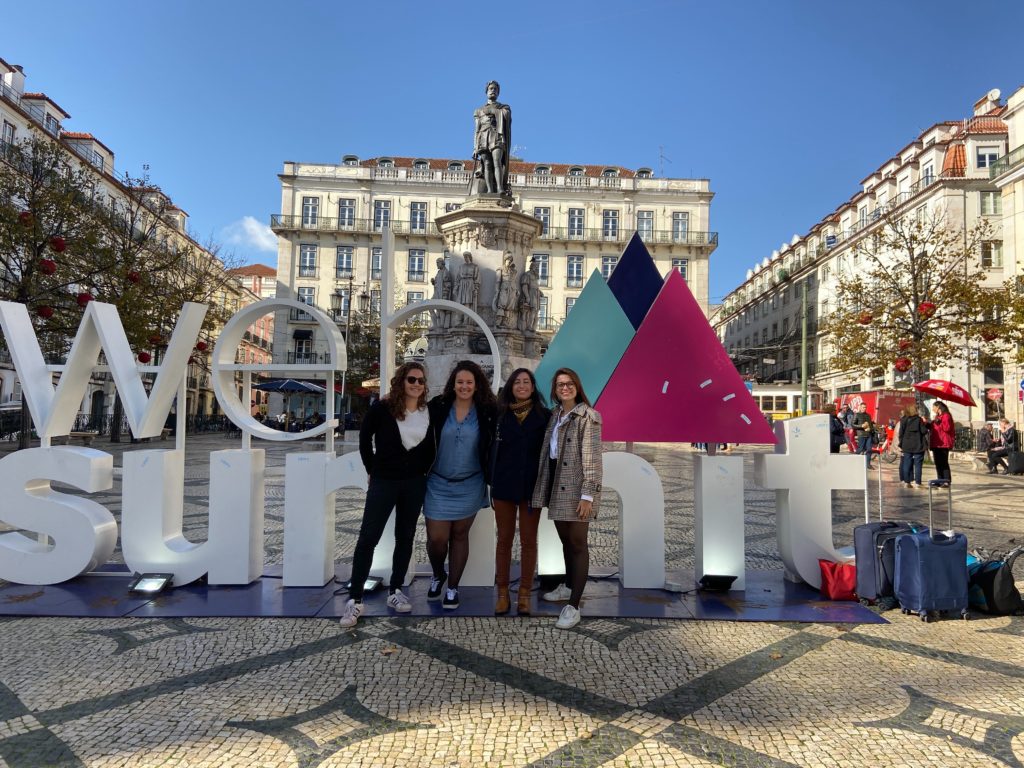
Once again this year, Webmecanik was lucky enough to attend. Indeed, Sophie Panot had the opportunity to take part in this big wave of inspiration.
Recognizing our good fortune, she wanted to share the unique experience she lived through over these 3 days.
Discover now the themes and key takeaways from Web Summit 2019:
1 – The future is Open

During this 2019 edition, Sophie Panot (commercial director at Webmecanik) realized that we are entering a new era in the use of Open Source. Indeed, open source has never been of more interest—the WebSummit also made it a recurring topic throughout these 3 days.
For those who aren’t comfortable with the Open Source concept, it’s a project whose source code is open. This means that anyone can read, modify, improve, or even reuse that code. Open source projects are growing in number—if I tell you WordPress, Magento, Drupal, Prestashop, or even Wikipedia, well, all five are open source projects. Wikipedia is also a great example of sharing information for the common good. Investing in an open source model offers many benefits; that’s why more and more companies are being won over.
Indeed, today open source is of interest to public administrations, which shows a desire for openness and transparency, as well as collaborative work—without forgetting that this model also enables cost reductions. This way of working appeals to SMEs, which take advantage of the strength of the community and enhance it, just like Drupal-specialized agencies or resellers of SugarCRM, or like Webmecanik and Mautic. Even big companies find their place there: this year, IBM acquired Red Hat, Microsoft is acquiring GitHub and Acquia has acquired Mautic. In another sector—medicine—we can see that connected devices are being highlighted: 77% of the code for connected devices is developed in Open Source.
To wrap up this section, here is a quote from Katharina Borchert, Director of Innovation at Mozilla: “Open web is a new world! It’s a decentralization of work, an unlimited access to creativity, and a new way of organizing work.”
2 – The customer journey in 2020
Customers have never been so central to brands’ strategies. With the revolutions in marketing analytics and our use of data, the customer experience is now a transparent and personalized process. However, that creates a new problem for brands: similarity.
That’s why we wanted to share the return of SAP’s Marketing Director, who explains what strategies she put in place to ensure her brand stands out from the others. Broadly speaking, her advice is to stop talking only about yourself, about your brand, your advantages… Instead, talk about your customers, their issues, and how your company can solve them—so you can help them!
Providing a good customer experience has become essential for businesses. You should know that 80% of customers who have just one bad experience will no longer be customers in the days or months that follow.
Here are her tips for a great customer experience:
- How it feels, the “feeling” (emotional intelligence is making a big appearance in the world of commerce and marketing. We’re invited to listen to our instincts to make decisions rather than focusing only on figures.)
- Bank on real-time personalization
- Anticipate new trends
- A strong Storytelling (you need to clearly identify your value, your personas, the tone of your communications, the places where your customers/prospects are, their mode of purchase… It may seem basic, yet only 30% of European companies have an overall digital strategy). For example, we know a prospect prefers email over all other channels, yet once they become a customer, 84% no longer want to communicate via email!
To conclude, we recommend working on your database and your target audience’s behaviors to personalize exchanges as much as possible in an omnichannel way.
3 – Retention is the new conversion
A few years ago, the SaaS model essentially consisted in signing up and converting. Nevertheless, that has evolved: the SaaS model today is based on subscription revenue, which raises the following question: What is conversion today?
Subscriptions have become an indispensable business model. Today, subscription-based economics is defined just as much by digital goods and services as by physical goods. Audiovisual content, fashion, beauty, food—these are sectors where subscriptions are advancing rapidly.
The transition from a traditional business model to a subscription-based one can be particularly complex. Indeed, it involves revisiting your entire business model, your conversion funnel, the way you communicate, and your relationship with your customers.
Instead of having a funnel geared toward conversion, we need to steer our funnel toward retention! Once you realize that, the way you set priorities for customer onboarding will completely change.
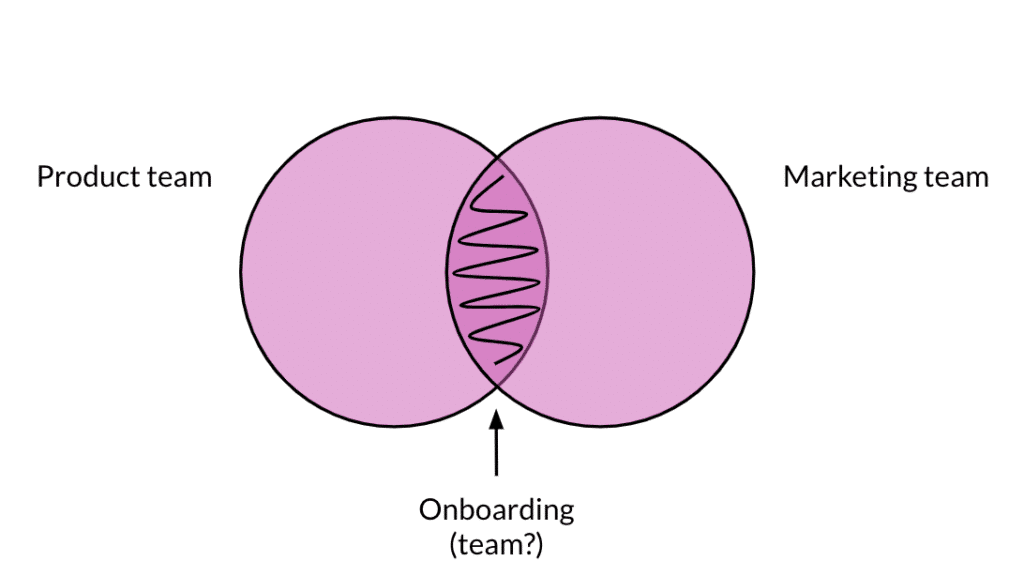
But how can we improve onboarding to ensure retention and reduce churns, etc.?
- Interview customers who have recently purchased your product/subscription
- Design an experience that helps customers reach their goal
- Ensure that marketing and product work in parallel
- Have success measurement indicators.
To get inspired, think about the actions/activities your best customers are able to do, in order to define the key essential steps for their (and your) success.
4 – Tips to boost your growth

At WebSummit, Marie had the chance to attend many conferences, which allowed her to compile the advice she heard the most during these sessions and that caught her attention:
- Minimize and simplify the conversion funnel as much as possible: 1 value proposition → 1 target → 1 landing page! This will help you especially during the analysis phase.
- Company culture is the soil in which a business grows, so you should never forget it.
- Controlled growth, to ensure a fulfilled team.
- Transparency in your communication. Don’t hesitate to ask your clients for advice directly—they’ll be happy to help.
- Reward based on merit and motivation, not seniority
- Integrate conversational marketing into your overall marketing strategy! Indeed, the way customers communicate with businesses is changing. Consumers today want to dialog quickly and in the most transparent way possible with businesses. It’s up to you to choose which actions are relevant to foster discussion with your prospects and customers: chatbots, social networks, SMS, etc.
- Automate everything you can. Choose interconnected tools.
To conclude this section, here are the 4 concepts to remember from WebSummit according to Marie:
- Ethics: We are in an era where the notion of ethics is increasingly important to consumers. Brands are aware that this is a criterion that matters more than others. Tech is now at the service of the environment, and finding a business model that responds to ecological and social projects has become a priority. In this regard, Google announced the launch of an accelerator for social and environmental start-ups by giving them access to Google’s resources and technological tools.
- Diversity: Thanks to diversity, we can improve and succeed together. To illustrate this, Marie gave us the example of Singapore and Malaysia, which set aside their political differences in order to solve the issue related to the supply of clean drinking water. Moreover, during WebSummit, many speakers advised agencies to come together and move forward jointly around shared challenges.
- Transparency: Transparency between a brand and its consumers, between managers and their teams, and in customer/partner relationships is essential today. Consumers need to be able to trust; we are in an age of distrust toward brands, and only transparency can reassure and make consumers want to trust you.
- Honesty: Focusing only on your product and its benefits is no longer enough. Indeed, consumers are looking for generous, sincere content that brings them real value. Talk about your purpose, your goal, your vision, your concrete actions, and their impact. Also, a piece of advice heard several times in order to reflect your brand’s personality is that it’s necessary to hire employees who align with your values and character traits.
5 – The App market

Here are a few figures:
- Apps convert 3 times more than mobile sites.
- Traffic coming from apps keeps growing
- A consumer spends an average of 76% of their time on their 3 favorite apps and 96% of their time on their 10 favorite apps.
Talking about apps, there’s one that’s really taking off: in your opinion, which one is it?
TikTok! Indeed, this social network is enjoying huge success among young people aged 12 to 18. Tik Tok today has 625 million active users per month. This Chinese app allows teens to post short videos in which they lip-sync, dance to music tracks, or take on various challenges.
Tik Tok in France:
- 4 million active users
- 57% women and 43% men
- 40 minutes per day: this is the average time spent by French users on TikTok
- 8 times: the average number of times users open the app per day
- 5 billion videos are viewed every month.
Tik Tok is now the new interaction channel with teenagers for brands. Indeed, more and more advertisers are taking advantage of the platform celebrities’ growing fame to promote content via paid videos. Today, TikTok is monetizing and providing advertisers with an increasingly solid and powerful platform. For now, through in-feed ad formats—but it’s only the beginning.
6 – Info obesity vs Data Driven

We live in a world of information overload (“infobésité”). Indeed, every day we face a tornado of information that pushes us to create ever-more advanced strategies in order to successfully capture attention.
As you’ve probably understood, this affects the way we work, our organization, and also our teams. Indeed, we’re constantly being asked for more, we are dealing with a multitude of information, and we are pushed to analyze everything. You should also know that today we make 20 times more decisions per day than 50 years ago. This is in particular what explains the emergence of new illnesses such as burnout.
So what’s the problem? We’re not using this vast amount of data properly—it’s time to evolve how we use data, especially in management.
Indeed, management must not remain on the sidelines of this major digital transformation. A new generation of leaders is using advanced data analytics and AI today to make decisions and steer their activity. This is what’s called DATA DRIVEN MANAGEMENT!
“Data-driven” management represents a break not only in how you design and execute a strategy, but also in management culture and methods.
But watch out not to fall into the traps of this digital revolution. Indeed, it’s essential to maintain an agile organization and an environment conducive to creativity.
7 – Future developments in our society
Our “way of becoming,” particularly at the behavioral level, in our new living contexts.
- The evolution of our homes:
Véranne was lucky enough, during WebSummit, to see what our homes will look like in 2025 in a conference given by Samsung. While connected homes are starting to emerge, the percentage of households equipped with them is still low. However, the number of connected devices for the home is rising sharply, and in ten years, it’s easy to imagine that most housing will be filled with these installations. Brightness, temperature, door locks… Everything will be automated. To go even further, by 2025 our vital signs, our overall health status (cholesterol, diabetes…) and our diet could be analyzed via sensors placed in our beds, jewelry, clothing… The value of these new technologies is to bring a new experience to consumers, who are increasingly looking for sensory emotions, memories… That’s why in 2025, walls could become true connected and dynamic devices, allowing the management of many functions within the home (security, ambiance…).
- The evolution of our travel:
You’ve surely heard about the self-driving car, which has been at the heart of automotive innovation in recent years. For the major players in the automotive industry, it’s now a given: in the coming years, self-driving cars will arrive—some models are practically ready. In addition to our cars that will drive us by themselves, our parcels will be delivered by air. Amazon has also unveiled its latest version of a hybrid drone dedicated to delivery and wants to test it in the coming months. To go even further, the Munich startup Lilium has just successfully passed the testing phase for its flying taxi.
Beyond these new futuristic means, scooters, skateboards, foldable bikes, and even hoverboards—designed to help you move over short distances—represent the future of mobility in cities according to experts. This phenomenon is called “urban micro-mobility” (“microbilité urbaine”). These new clean, practical and economical ways of getting around address today’s concerns related to sustainable development, while in many cases also being the fastest solution for traveling from point A to point B in urban areas. For the city of Paris, there was truly a before/after with the electric scooter. We can’t talk about scooters without mentioning the brand “Lime,” which is worth today $2.4 billion and is everywhere across our European capitals.
To conclude, our world is changing fast, and we’re only at the beginning. Of course, this evolution will require us to change—we will need to adapt as we have until now. However, we are the players in this change, so it’s essential to keep our critical thinking and our ability to discern, so we can be an active participant rather than simply endure all these innovations. We must move forward, not run away just because we’re afraid.
We hope we’ve given you the desire to join us next year. Don’t hesitate to reach out if you’d like to join us for Web Summit 2020!