

B2B sales are a real challenge and will never be an easy task. This involves a long process to find and nurture leads: 80% of B2B marketers believe that their lead generation efforts do not meet ROI objectives.
If your sales team is having difficulty converting new customers, it may be time to rethink your “lead nurturing” strategies. Here are 3 tactics to improve your “lead nurturing”.
Sales and marketing alignment
When it comes to lead generation, the first thing to do is make sure that the sales and marketing departments share the same vision and the same goals. If the sales team is pushing a particular product, but marketing is focusing on another, this can create conflict or confusion. The B2B sales process is inherently more complex than all other sales processes:
- Higher selling prices,
- Methodical decision-making involving a greater number of stakeholders,
- Longer sales cycles,
- Fewer prospects and even fewer customers.
A lack of alignment can therefore lead to communication issues, faulty processes, and inconsistent metrics, which would wreak havoc on lead nurturing strategies. In short, this results in falling sales and reduces customer trust in the brand.
The “Demand Gen Report” reveals that lead quality and lead follow-up are the priorities in terms of communication needs between the sales and marketing departments: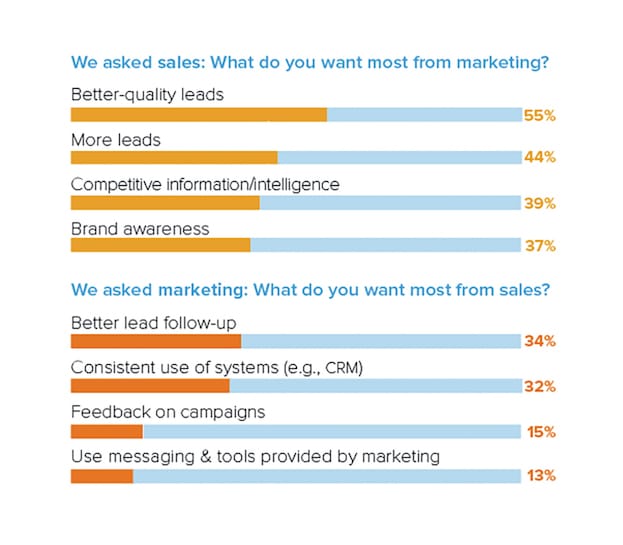
Source
Before developing and implementing strategies that unify marketing and sales, make sure that every stakeholder understands the importance of a unified vision.
Content diversification
A study conducted by SiriusDecisions reveals that 80% of purchasing decisions are based on the experience the customer develops with the brand. By diversifying content, companies can improve these experiences and find new customers through previously unsuspected means.
Content diversification also includes spreading your message beyond your own platform and across different channels. For example, in recent years, companies that have diversified their content by contributing to several blogs have seen their number of leads multiplied by 4.5.
It is risky for a brand to publish through only a single channel because not all customers respond to content in the same way. This can result in losing your audience, limiting market share, and therefore also reducing the number of leads your company can generate.
Also read: Lead magnet: everything you need to know about this inbound marketing technique
Also read: 5 techniques for collecting more emails from your website
Video emails
It is generally known that:
- Videos are among the most viewed content online,
- email marketing is one of the most effective ways to gain new leads.
By combining these two powerful tools, the results can be very positive. The lead nurturing process can prove long and tedious, and distributing video content can energize your relationship with your prospects.
A study conducted by GetResponse reports that emails containing video have a click-through rate up to 96% higher than emails containing only text. Video content is perceived as more interesting by your audience because it spares them from having to sift through a large amount of content.
To boost engagement in your next email campaign, consider adding video content. Adding a “play” button on the video will also encourage people to click to view the content.
In conclusion, nurturing your prospects does not have to be an intimidating and laborious task. Strengthening your content strategy will increase your flexibility and improve interactions with your brand. And don’t forget to refine your email strategy with video to boost engagement and encourage the reader to discover more of your offer.
Whatever your strategy, make sure you deliver a consistent message to your audience.