
What is CRM AI (artificial intelligence applied to CRM) and how can it be used in your day-to-day sales activities? Check out our introductory guide explaining the basics of AI in CRMs to understand everything artificial intelligence can bring to your sales teams.
With prospects’ expectations constantly evolving, AI in CRMs is going to become increasingly essential for optimizing processes and improving sales performance. Whether you are new to the subject or looking to deepen your knowledge, we provide the keys you need to fully take advantage of AI in CRMs to boost your day-to-day sales activity.
AI as a time-saving lever for sales teams
Introduction
Artificial intelligence has shaken up the world in recent years. But what about CRM software (or GRC for Customer Relationship Management)? Before diving into developments in artificial intelligence applied to CRM, let’s take a moment to understand how this technology benefits you and your teams.
In this article, you will discover how Artificial Intelligence can transform your CRM into a machine for generating opportunities, by increasing efficiency, personalization, and sales performance.
Understanding AI in CRMs
What is AI?
Artificial intelligence (AI) is a process aimed at imitating human cognitive abilities, particularly in decision-making, using algorithms executed in a computing environment.
CRM AI in your ecosystem
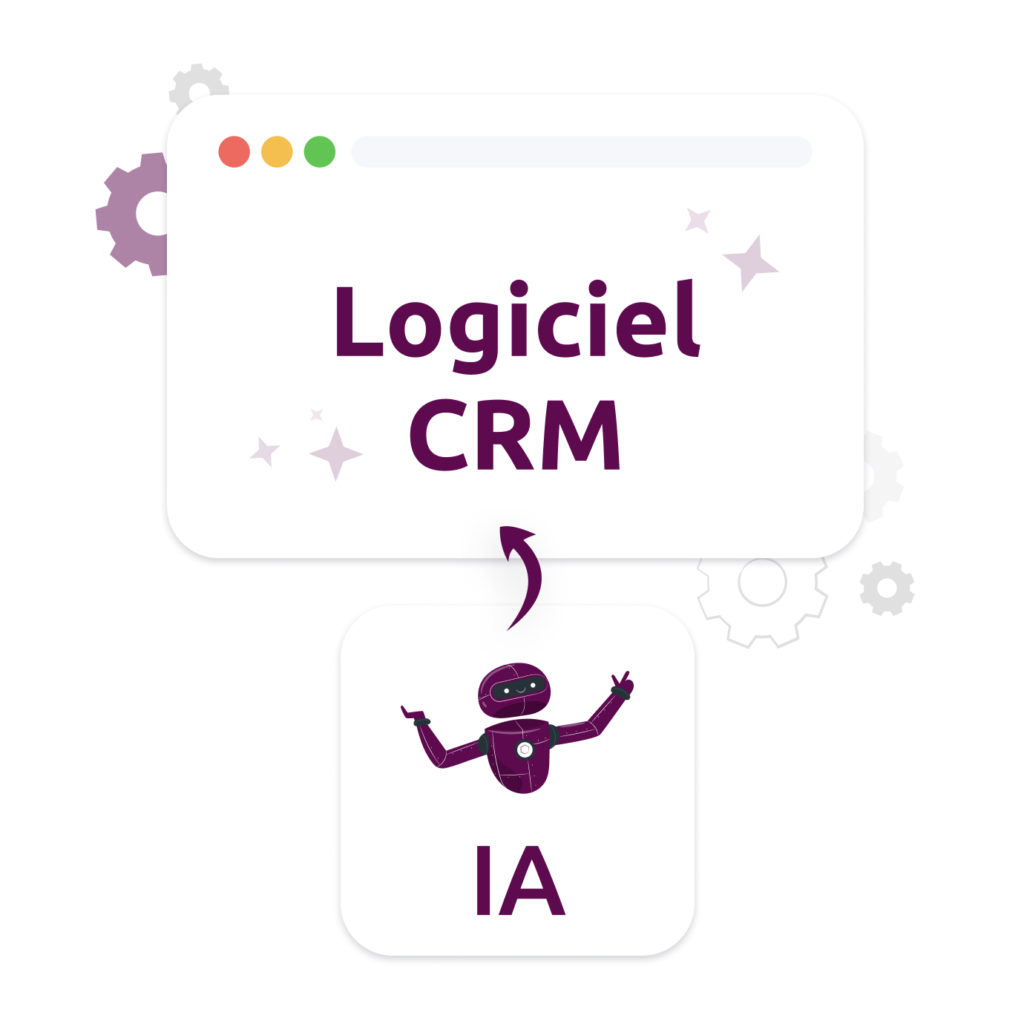
In CRMs, integrating AI changes the way companies interact with their prospects and customers by managing all or part of their sales processes. AI then comes into play in several tasks, including advanced task automation, personalization of interactions, and predictive analytics.
- Thanks to automation, repetitive tasks such as data entry or responding to frequently asked questions are handled more efficiently, thereby freeing up time for higher value-added activities.
- Personalization of interactions, meanwhile, allows companies to offer tailored customer experiences based on individual needs and preferences.
- Predictive analytics uses tools such as chatbots and sentiment analysis to anticipate customers’ future needs, helping companies remain responsive and proactive..*
CRM AI basics for sales teams
Automation and efficiency
One of the most remarkable aspects of AI in CRM is its potential to automate repetitive tasks in the sales process. By freeing sales reps from tedious and time-consuming tasks, Artificial Intelligence allows them to focus on higher value-added tasks in order to focus on customer relationships and closing sales.
Examples of automation include automatic data entry, lead classification based on their level of qualification, and even automatic responses to customers’ frequently asked questions.
Automating these tasks therefore involves several AI building blocks in CRM:
- Automating data processing: this AI includes data cleaning, duplicate detection, and automatic updating of customer profiles. This automation ensures that the company’s data is quickly updated, thus remaining relevant and usable.
- Predictive analytics and scoring: this AI enables a better understanding of customer needs, the identification of emerging trends, and the prediction of behaviors. Thanks to this analysis, organizations can anticipate market demands and adapt their strategies accordingly.
- Intelligent customer segmentation: this AI enables more precise customer segmentation by analyzing vast data sets to identify specific behavioral trends or patterns. This intelligent segmentation allows companies to target their sales and marketing messages more effectively and create personalized campaigns that resonate more strongly with each customer group.
Artificial intelligence in CRMs has also already demonstrated its positive effects on sales reps’ efficiency and on the time savings it brings in many companies.
According to a study conducted by the Harvard Business Review, “Companies that use AI tools as part of their sales activities have increased the number of leads they receive by 50%”
Personalization with the help of AI
One of the most powerful advantages of AI in CRM is its ability to personalize interactions with customers. By analyzing customers’ historical and behavioral data, AI can provide personalized recommendations and responses tailored to each individual. This personalization will help strengthen customer engagement by offering them more relevant experiences and aligning offers with their specific needs.
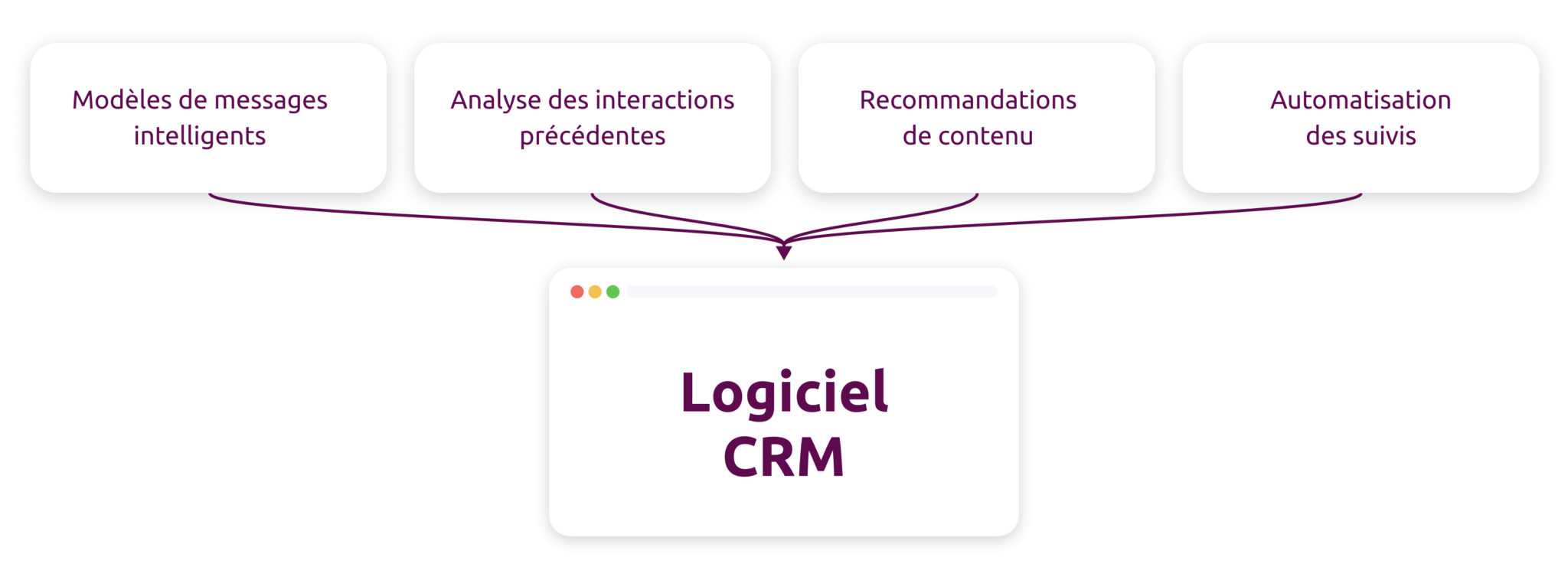
Personalizing sales messages for prospects is based on several innovations:
- Intelligent message templates: intelligent message templates automatically adapt to customers’ needs and preferences. These templates can be pre-filled with relevant information about the prospect or customer, allowing sales reps to save time while delivering personalized communications.
- Analysis of previous interactions: the analysis of previous interactions with customers to understand their communication preferences is carried out by AI directly in your CRM. Based on this data, sales reps can adjust the tone, style, and content to better interact with each customer.
- Content recommendations: content recommendation can provide personalized content recommendations. This can include suggestions for emails, blog articles, or relevant resources based on the specific interests and needs of each prospect or customer.
- Automation of follow-ups: automation using artificial intelligence can help automate prospect follow-up and the opportunity pipeline. By analyzing prospect behavior, AI systems within the CRM can automatically trigger personalized follow-up emails to maintain engagement and nurture the relationship.
Well, you get the idea: a personalized message goes hand in hand with efficiency!
AI as a time-saving lever for sales teams
Time savings for your sales teams
Read our article “How does AI in CRMs enable valuable time savings for sales teams?” and discover how artificial intelligence will allow your sales reps to save precious hours. We offer you an overview of how AI is revolutionizing time management for sales teams, while providing practical advice to take full advantage of this Artificial Intelligence.
Conclusion
In summary, artificial intelligence (AI) in CRMs will have a real impact on sales teams. By automating repetitive tasks and offering increased personalization of interactions with customers, AI allows sales reps to free up valuable time and focus on higher value-added activities. The practical examples presented illustrate how AI in CRMs can revolutionize the way companies interact with their prospects and customers, leading to improved operational efficiency and sales performance.