

 Folder-based management
 Marketing AI
 Marketing Segmentation
 Multichannel communication
 Workflow automation
 Email marketing & newsletter
 Smart forms
 Landing Page
 Dynamic web & email content
 Behavioral tracking
 Lead scoring
 Custom objects
 GDPR Compliance
 Generate qualified leads
 Retaining customers
 Personalize your communication
 Integrations
 Migration to Webmecanik
 Partners
Lead Stages
 Understand your sales funnel
Optimize your sales funnel
Sustainably align your sales and marketing teams
Understand your sales funnel
Optimize your sales funnel
Sustainably align your sales and marketing teams
What are lead stages?
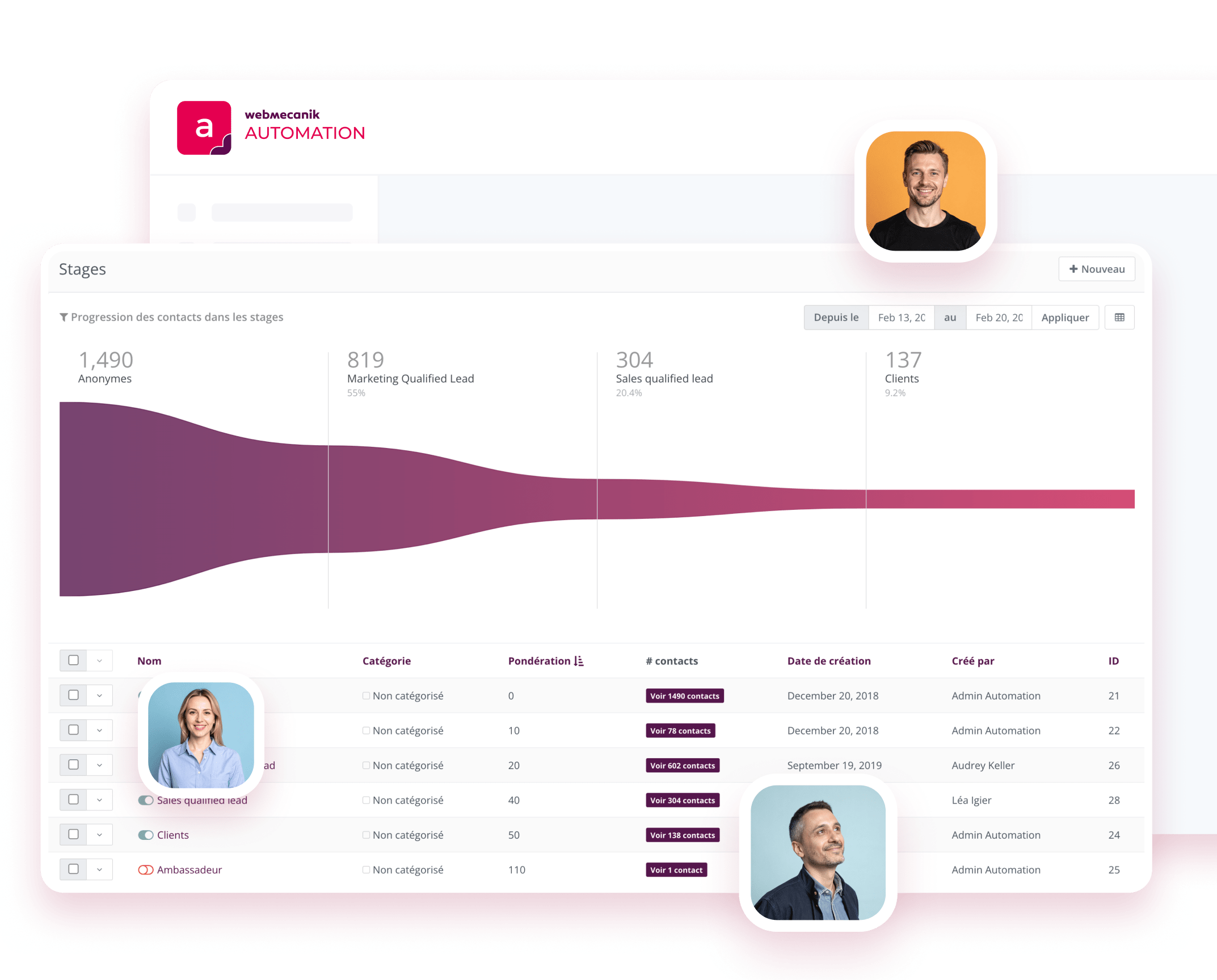
Lead stages, or managing the stages of lead qualification, is an essential structured process for assessing and classifying prospects based on their maturity in the buying journey. This method enables companies to better understand and interact with each prospect, by adjusting marketing and sales strategies according to their progress. Closely linked to the sales funnel (or conversion funnel), it allows you to instantly understand which stages your contacts are in. This feature is also referred to as Lead Staging.
Behavioral tracking
Discover how behavioral tracking boosts your marketing performance and strengthens the effectiveness of your sales follow-up.
Learn more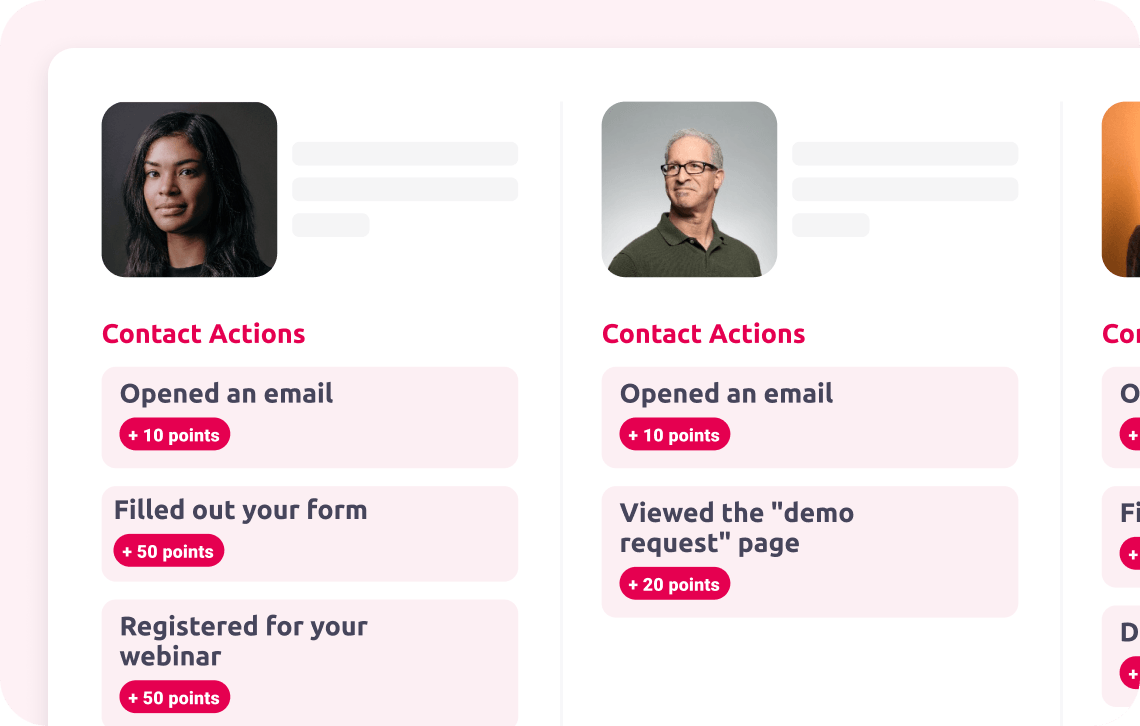
Benefits of managing leads with lead stages
Get a snapshot view of your sales funnel with lead staging
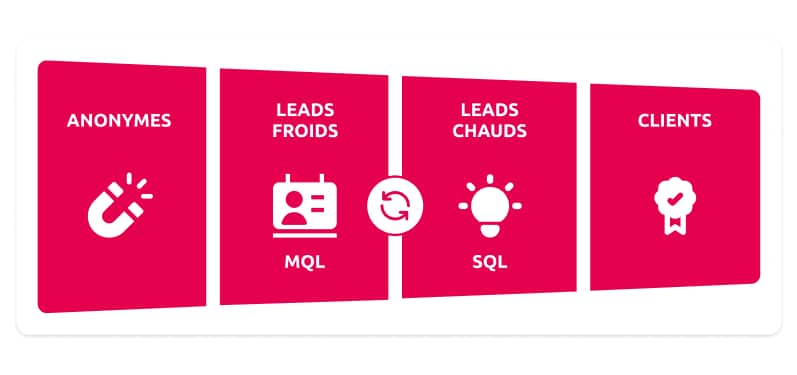
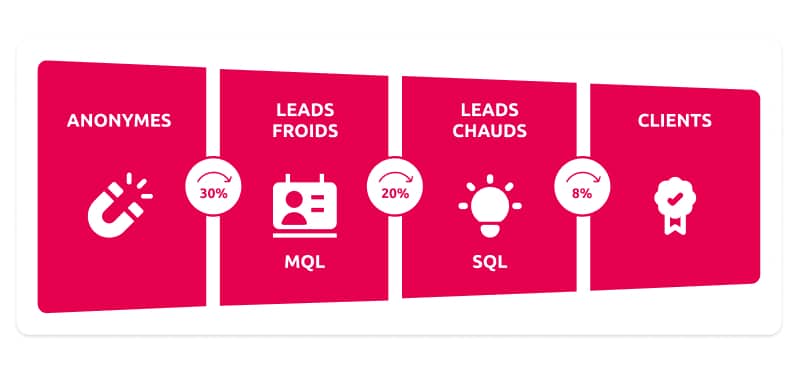
One of the major advantages lies in being able to quickly visualize how many contacts are in each stage of your sales funnel. This allows you, among other things, to calculate the conversion rate from one stage to the next in order to analyze performance and improve decision-making.
Measure your performance and adapt
Lead stages offer the ability to track the effectiveness of your actions in real time by giving you the keys to optimize your strategy based on the results obtained. This ensures better adaptation to the needs and reactions of your prospects. You can easily visualize the number of contacts converted between each stage of your sales funnel, from the lead capture phase to becoming a customer.
Alignment with sales and marketing teams
Alignment with sales and marketing teams is essential to understand your conversion funnel. Indeed, your leads will naturally move from one department to another depending on their maturity and the strategies you want to implement. Good alignment and good interdepartmental communication are therefore necessary to improve the effectiveness of your actions.
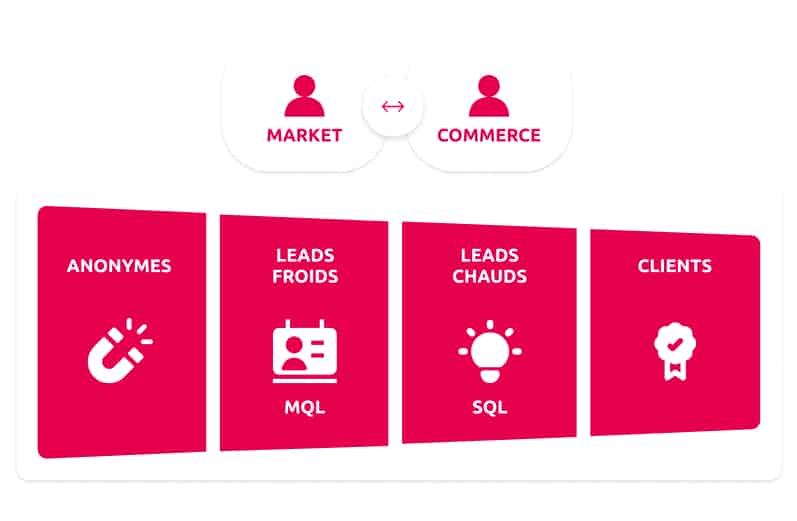
Examples of conversion funnel models adapted to Lead Stages
Each company adopts a customized conversion funnel, even though many stages are often similar. Generally, the main objective is to turn an initial, little or unqualified prospect into a customer. Here are some stage models you could incorporate into your conversion funnel.
Classic Model
This Lead Stages model follows a traditional conversion funnel focused on prospect qualification, either via marketing through marketing automation campaigns or through sales. It typically starts with anonymous contacts (website visitors), progresses to MQL (Marketing Qualified Lead) and SQL (Sales Qualified Lead), and ultimately converts these prospects into new customers.
Human Resources Model
In the human resources sector, it can be useful to define different stages of a candidate recruitment process. After the anonymous contacts phase, you could categorize stages as follows: Application received, Candidate contact, Candidate selection, and finally, Application accepted.
E-commerce Model
For e-commerce, integrating the stages of a customer’s buying journey into your Lead Staging strategy can be beneficial. Following anonymous contacts (site visitors), identify contacts who have never made a purchase, then the stages of occasional buyer (fewer than one purchase) or regular buyer (more than 2 purchases). Another variant of this model is to rely on RFM segmentation (Recency, Frequency, Monetary).
SaaS Model
For a SaaS (Software as a Service) model, common stages include first purchase, subscription, and retention. These stages can be adapted to fit this model, focusing on revenue generated by new customers or subscription renewals.
Why use the lead stages feature?
The lead stages feature is an essential tool to grasp the nuances of your conversion funnel and quickly adapt your marketing and/or sales strategy. It not only offers immediate visibility into the number of contacts at each stage but is also an indispensable tool for efficiently adjusting and assessing the return on investment of your marketing campaigns.
See other features
Adopt the marketing solution that boosts your ROI
Make every interaction with your prospects more effective: personalize your messages, optimize your journeys, and turn every touchpoint into a conversion opportunity.